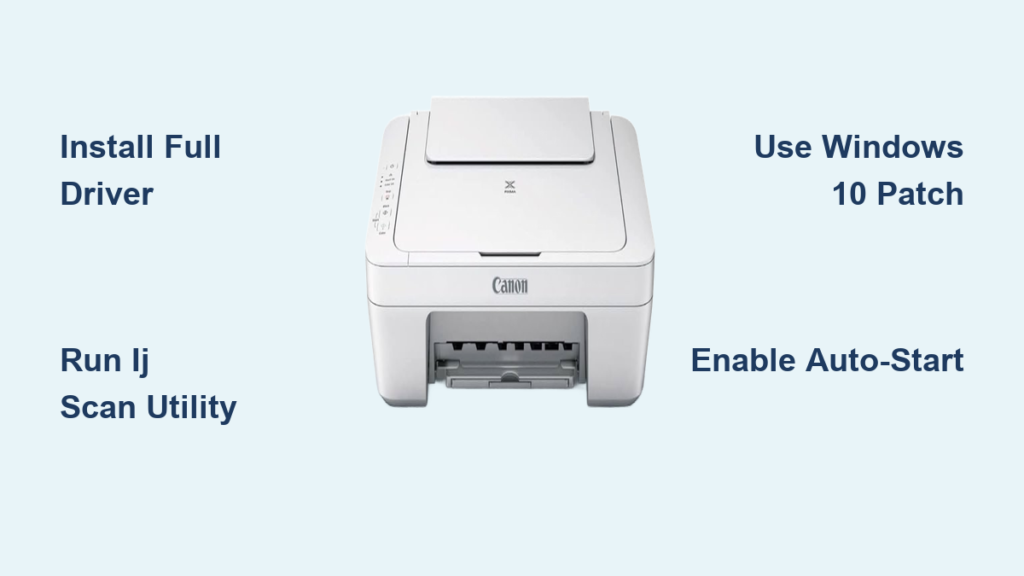
If your Canon PIXMA scanner isn’t producing the digital files you need, you’re not alone. Many users struggle with setup, connectivity, or simply don’t know how to initiate a scan from their computer or phone. The good news? Once configured, Canon PIXMA scanners offer fast, reliable scanning across multiple platforms, including Windows, macOS, iOS, and Android, using USB, Wi-Fi, or direct control panel methods. This guide walks you through every step: installing software, connecting devices, placing documents correctly, and scanning to PDF or JPEG.
Whether you own a TS3150, TS3522, TR3722, G3270, or another model, you’ll learn how to scan efficiently and avoid common pitfalls.
Install Required Scanning Software Before Scanning

Before scanning, your device must have the correct Canon software installed. Without it, your computer or phone won’t recognize the scanner, and you’ll be stuck without digital output capabilities.
Download IJ Scan Utility for Windows and Mac
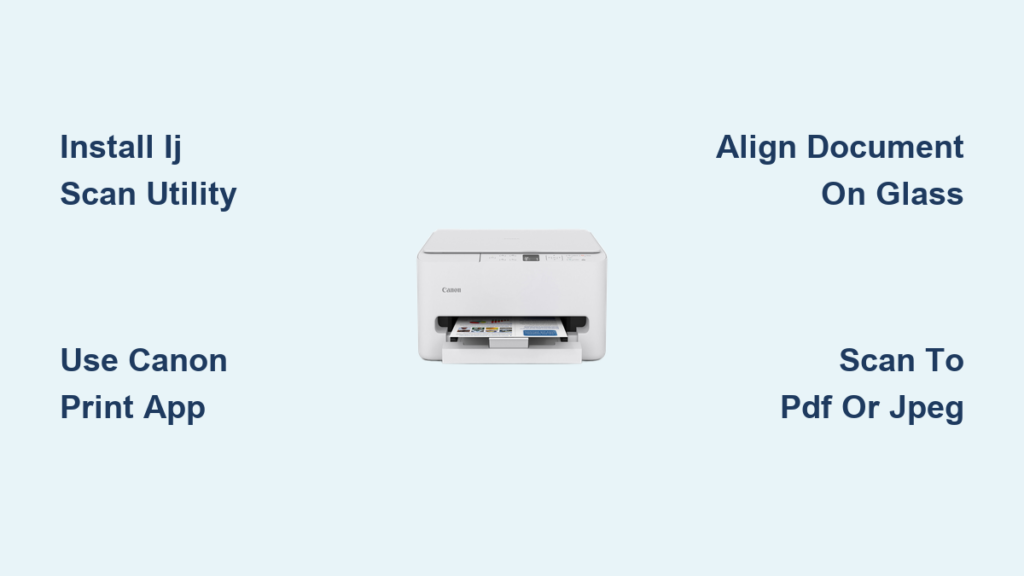
Canon’s IJ Scan Utility is the primary desktop app for scanning photos and documents with full feature access.
- Go to the official Canon support website at usa.canon.com/support
- Enter your PIXMA model number in the search field
- Under Drivers and Downloads, select IJ Scan Utility
- Choose your operating system and download the installer
- Run the file and follow the on-screen prompts
- When asked, select Wi-Fi or USB as your connection type
- Complete the installation, which includes essential drivers
Some versions skip creating a desktop shortcut. If this happens, launch the software manually:
- Windows: Start menu, All Apps, Canon Utilities, IJ Scan Utility
- Mac: Open Finder, Applications folder, IJ Scan Utility
Install Canon PRINT App on Smartphones
For iOS and Android devices, use the official Canon PRINT Inkjet/SELPHY app.
- Open the App Store on iOS or Google Play on Android
- Search for Canon PRINT Inkjet/SELPHY (not SELFRY)
- Install the app on your device
- Open the app and tap the printer icon in the top-left corner
- Tap Add / Switch and select Register Printer
- Wait for your printer to appear in the list
If your printer doesn’t appear automatically:
- Tap Printer not found
- Respond No to the automatic connection prompt
- Tap Yes to proceed with manual setup
Enable Wi-Fi Pairing on Your Printer
To connect your PIXMA scanner wirelessly to your smartphone or computer, follow these steps.
- On your PIXMA printer, press and hold the Wi-Fi button for 2 seconds
- The Wi-Fi light will start blinking, indicating pairing mode is active
- In the Canon PRINT app, confirm you pressed the button
- Tap Next, then Connect, then Yes
- Enter your Wi-Fi password carefully
- A green checkmark appears when connection succeeds
Both your printer and phone must be connected to the same Wi-Fi network for wireless scanning to work.
Prepare the Scanner for Accurate Scans

Proper physical setup ensures clean, accurate scans every time you use the PIXMA scanner. Taking a few moments to prepare correctly prevents wasted time from re-scanning.
Power On and Open the Scanner Lid
Ensure your printer is powered on before attempting any scan. For thick documents like books or notebooks, fully lift the scanner lid. Models like the TR3720 support this feature with flexible hinges that hold the lid open while you position your document.
Keep the document flat against the glass to avoid shadows or distortion in the final scan.
Place Documents Correctly on the Glass
Correct document placement prevents skewed or cropped scans that require re-scanning.
- Lift the scanner lid carefully
- Place your document face down on the glass
- Align the top-left corner of the paper with the etched arrow on the glass
- Slide the document flush against the left and front edges
The maximum supported size is Letter (8.5 × 11 inches). Larger documents won’t scan fully and may be cut off.
Scan Documents From Windows Computers
Windows users have multiple options for scanning with their PIXMA device. The built-in tool works for basic needs, while Canon’s dedicated software offers more control.
Use Windows Fax and Scan
This method works after driver installation is complete.
- Press Start and type scan
- Open Windows Fax and Scan from the results
- Click New Scan in the toolbar
- Select your Canon PIXMA model from the device list
- Choose your settings: Color, Grayscale, or Black and White
- Select PDF for documents or JPEG for photos
- Set resolution: 150 to 300 dpi is standard (higher means clearer but larger files)
- Click Scan to begin
Default save location is Documents > Scanned Documents.
Use IJ Scan Utility for Full Features
For complete control over your scans, including multi-page scanning, use Canon’s IJ Scan Utility.
- Open IJ Scan Utility from the Start menu
- Click Settings to configure options
- Select your scan type: Photo, Document, or Auto
- Check the option for Check scan results and specify save settings
- Click OK to confirm
- Click Scan to begin
After scanning a page:
- To add another page: Replace the document and click Scan again
- To finish: Click Exit to save your multi-page document
Change the Default Save Location
Customize where your scans go for easier organization.
- In IJ Scan Utility, go to Settings
- Navigate to Scan Type and select Add
- Choose your preferred folder (Desktop, Google Drive, custom folder)
- Name your custom scan type
Use this feature to send scans directly to email attachments or Word documents without manual moving.
Scan Documents From Mac Computers
Mac users follow a similar process to Windows but use macOS interfaces and folder structures.
Install and Launch IJ Scan Utility
- Download IJ Scan Utility from Canon’s support site using your model number
- Open the Applications folder in Finder
- Locate and launch IJ Scan Utility
Start Your First Scan
- Click Settings to configure your preferences
- Choose Photo, Document, or Auto scan type
- Enable preview mode to review before saving
- Click Scan to begin the process
- After scanning, save or share the file using the on-screen options
Default save location varies by system, typically saving to Downloads or Pictures. Set a custom path in Settings for better organization.
Scan From iPhone or Android Devices
Mobile scanning is fast, convenient, and ideal for on-the-go use. The Canon PRINT app puts scanning power in your pocket.
Open the Canon PRINT App
For most PIXMA models, use Canon PRINT Inkjet/SELPHY. For MegaTank models like the G3270 or G4770, use Canon Print App instead.
Scan Your Document
- Place your document face down, aligned with the arrow on the glass
- Close the scanner lid securely
- Open the Canon PRINT app on your phone
- Tap the Scan button
- Configure options: Document Type (Document for text, Picture for photos)
- Set Color Mode: Color or Black and White
- Choose Format: PDF recommended for documents, JPEG for photos
- Select Size: Letter is default
- Adjust Resolution if needed
- Tap Back, then tap Scan
Create Multi-Page PDF Files
After the first page scans:
- Remove the scanned page
- Place the next page correctly on the glass
- Tap Scan again
- Repeat for all pages
Scanning takes approximately 14 to 15 seconds per page. The app automatically combines all pages into one PDF file.
Save and Share Your Scans
- Tap Exit, then OK to save
- The file is stored in your phone’s internal storage
- Tap the share icon in the top-right corner to:
– Send via email
– Send via text message
– Upload to Google Drive, Dropbox, or iCloud
– Post to social media
– Save to your phone gallery
Create a dedicated folder in your file manager to organize scans by date or project.
Use Direct Scan Without a Computer
Some PIXMA models like the TS3420, TR3720, and TR3722 let you scan using only the printer’s control panel. However, this method produces printed copies, not digital files.
Make a Physical Copy
This uses the scanner but outputs a printed hard copy.
- Power on the printer
- Press OK until LTR appears (confirms Letter size)
- Load blank paper into the input tray
- Lift the scanner lid
- Place document face down, aligned with the arrow
- Close the lid
- Press the black or color button
- Press the Scan button
- Fully extend the output tray
The result is a printed copy. No digital file is saved to any device.
To create digital files, you must use a computer or smartphone with the Canon PRINT app or IJ Scan Utility.
Make Multiple Copies on TR3720 and TR3722
Verify your scanner is working properly by making copies through the control panel.
- Load blank paper into the input tray
- Place the original document face down on the glass
- Press the black or color button once for each copy you want
– Example: Press three times for three copies - The screen displays the number of copies being made
- Press Stop to cancel at any time
A color copy takes approximately 20 seconds to complete. This confirms your scanner hardware is functioning correctly.
Manage Your Scan Output Effectively
Understanding file formats and save locations helps you work more efficiently with your scanned documents.
Choose the Right File Format
| Format | Best For | Notes |
|---|---|---|
| Documents, multi-page files | Preserves layout and formatting | |
| JPEG | Photos, images | Smaller files, ideal for sharing |
PDF is recommended for text documents because it maintains layout and enables multi-page compilation. JPEG works best for photographs due to smaller file sizes.
Default Save Locations by Platform
| Platform | Default Save Folder |
|---|---|
| Windows (Fax and Scan) | Documents > Scanned Documents |
| Windows (IJ Scan Utility) | Documents or custom path |
| Windows 7 | My Documents |
| Mac | Downloads, Pictures, or user-defined |
| Smartphone | Internal storage or app folder |
Change these defaults in your software settings for better organization and faster access.
Share Scanned Files Easily
From any device, you can share your scans through multiple channels:
- Attach to email messages
- Send via text message (SMS or MMS)
- Upload to cloud services like Google Drive, Dropbox, iCloud, or OneShare
- Share via Bluetooth
- Save to phone gallery or computer folders
Fix Common PIXMA Scanning Problems
When your scanner isn’t working properly, these solutions address the most frequent issues.
Scanner Not Detected
This problem usually stems from connectivity or driver issues.
- Visit canon.us/ijstart and install full drivers
- Reconnect USB cables securely
- Restart both your printer and computer
- Reinstall IJ Scan Utility
Wi-Fi Connection Fails
Wireless connection problems are often caused by network mismatches.
- Ensure your printer and device are on the same Wi-Fi network
- Re-enter your Wi-Fi password carefully (check for typos)
- Hold the Wi-Fi button for 2 or more seconds until it blinks
- Restart your router and printer
Poor Scan Quality
Blurry or streaked scans usually have simple causes.
- Clean the scanner glass with a soft, lint-free cloth
- Re-scan with proper document alignment
- Increase the resolution setting in your app (200 to 300 dpi recommended)
No Desktop Icon After Installation
Some installers skip creating shortcuts.
- Launch from the Start menu (Windows) or Applications folder (Mac)
- Create a manual shortcut if needed
Software Won’t Open
Corrupted installations prevent software from launching.
- Reinstall IJ Scan Utility or Canon PRINT app
- On Windows, right-click and select Run as Administrator
- Check Canon’s website for operating system compatibility
Duplicate Files Created
Multiple apps saving simultaneously creates duplicates.
- Disable auto-save in unused apps
- Check default folders to avoid confusion
Always download software from Canon’s official website to avoid fake or outdated versions.
PIXMA Model-Specific Scanning Tips
Different PIXMA models have unique features and requirements.
TS3150
This model uses Windows Fax and Scan after driver installation. No CD is included in the box, so download software from canon.us/ijstart.
TS3522
Supports both Wi-Fi and USB connections. Requires online software download since no installation CD is included.
TS3420
Can direct-scan to print copies using the control panel. For digital files, use IJ Scan Utility or Canon PRINT app.
TR3720 and TR3722
Supports multi-page PDF scanning via the smartphone app. The control panel allows copy functions. Full wireless setup uses Canon PRINT Inkjet/SELPHY.
G3270 and G4770 (MegaTank)
Use Canon Print App (not PRINT Inkjet/SELPHY). The on-screen keyboard supports special characters in passwords. These models are ideal for high-volume scanning tasks.
Best Practices for Perfect Scans Every Time
Follow these tips to get consistent, high-quality results from your PIXMA scanner.
- Align every document with the arrow and glass edges
- Use PDF format for text documents to preserve layout
- Clean the scanner glass weekly with a soft cloth
- Ensure stable Wi-Fi connection for wireless scanning
- Install full drivers from Canon’s official site
- Test scan one page before multi-page jobs
- Back up important scans immediately to cloud storage
- Use preview mode to check alignment before finalizing
- Create a dedicated save folder and set it as default
- Update apps and drivers regularly for best performance
Key Takeaways for Using Your PIXMA Scanner

Canon PIXMA scanners are powerful tools when set up correctly. Remember that digital scanning requires IJ Scan Utility or the Canon PRINT app. Direct scan from the printer only produces printed copies, not digital files.
PDF is the best format for documents, while JPEG works best for photos. Always ensure your printer and device are on the same Wi-Fi network for wireless operations. With these steps, you can scan receipts, contracts, photos, and notes quickly and reliably, regardless of your model or device.
Frequently Asked Questions About PIXMA Scanners
How do I connect my PIXMA scanner to Wi-Fi?
Press and hold the Wi-Fi button on your printer for 2 seconds until it blinks. Then open the Canon PRINT app, tap Add Printer, and follow the on-screen steps to enter your network password. Both devices must be on the same Wi-Fi network.
Why isn’t my computer detecting the scanner?
Install the full drivers from Canon’s support site at usa.canon.com/support. Reconnect USB cables if using a wired connection, or restart both devices. Reinstall IJ Scan Utility if the problem persists.
Can I scan from my iPhone with a PIXMA printer?
Yes. Download Canon PRINT Inkjet/SELPHY from the App Store, register your printer, place your document on the glass, and tap Scan in the app. You can save as PDF or JPEG and share directly from the app.
What’s the difference between PDF and JPEG scans?
PDF preserves document layout and combines multiple pages into one file, making it ideal for text documents. JPEG creates smaller files with high visual quality, best for photographs and images.
How do I create a multi-page PDF on my PIXMA scanner?
Using the Canon PRINT app, scan your first page, then tap Scan again for additional pages. The app automatically combines all pages into a single PDF when you tap Exit.
Why is my scan quality poor?
Clean the scanner glass with a soft, lint-free cloth. Ensure proper document alignment with the arrow. Increase your resolution setting to 200 or 300 dpi in the scanning app for clearer results.