Your check engine light just came on. Maybe you tightened the gas cap, fixed a minor issue, or simply need the light off to pass emissions, but you do not have an OBD2 scanner. Good news: you can reset car codes without a scanner using simple, no-cost methods that work on most vehicles.
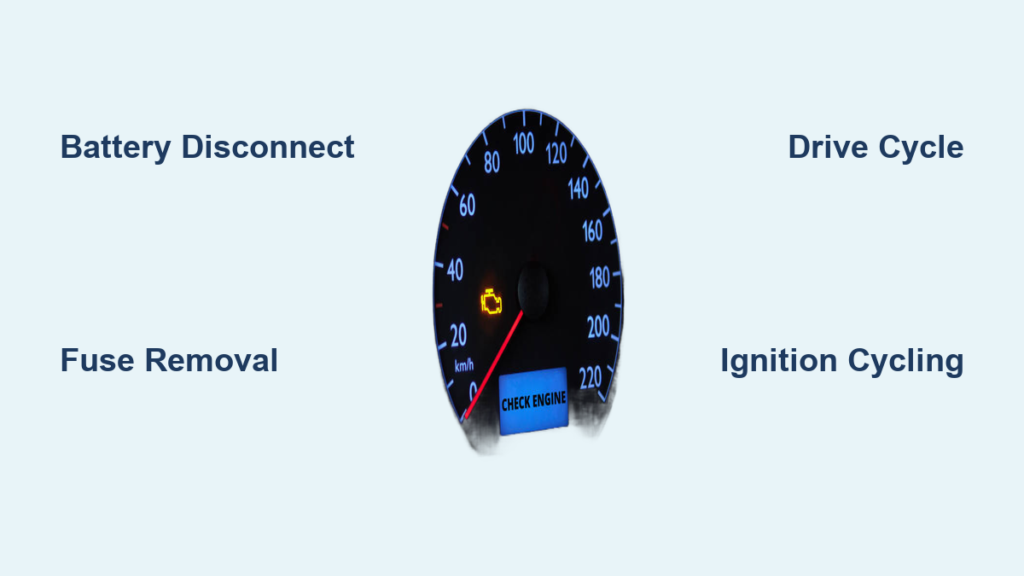
While scanners are the most reliable way to clear diagnostic trouble codes, several physical and electrical techniques can reset your vehicle is Engine Control Unit and turn off the check engine light. These include battery disconnection, fuse removal, ignition cycling, and drive cycles. This guide covers every proven method to reset car codes without a scanner, including step-by-step instructions, vehicle-specific tips, risks, and when to use professional tools instead.
Battery Disconnect with Horn Discharge
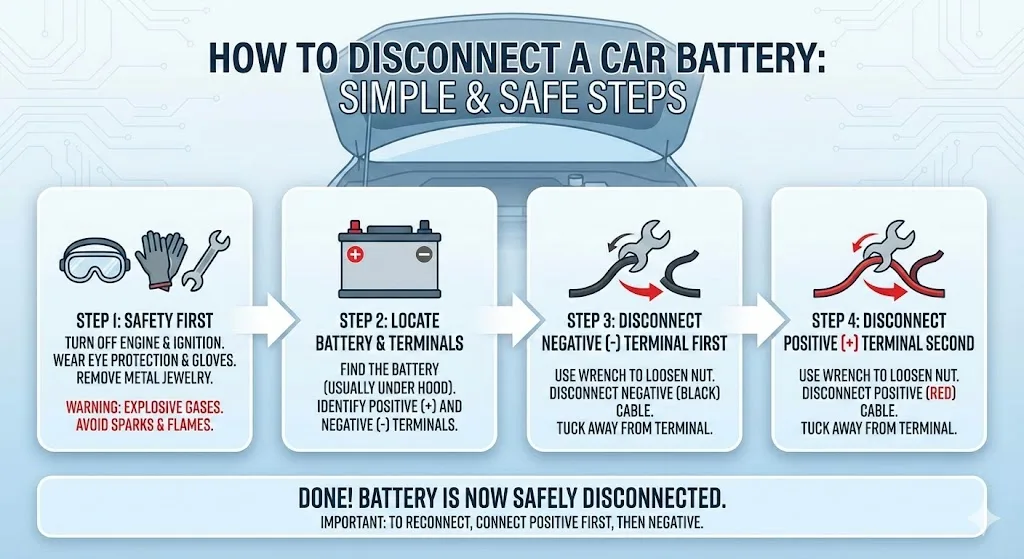
The most effective universal method to reset car codes without a scanner is disconnecting the battery and draining residual power from the ECU.
Why This Works
The ECU stores temporary fault codes in volatile memory. Cutting power and discharging capacitors forces a full reset, erasing soft or pending codes, especially on pre-2010 gasoline vehicles.
Steps to Clear Codes
-
Park Safely
• Turn off the engine
• Engage the parking brake
• Open the hood and locate the battery -
Remove Negative Terminal First
• Use a 10mm wrench to loosen the black negative cable
• Pull it away and secure it so it cannot touch metal -
Optional: Remove Positive Terminal
• Disconnect the red positive cable for a complete power cut -
Drain Capacitor Charge
• Turn the ignition to ON (do not start)
• Cycle ON to OFF three times
• Press and hold the horn for 30 to 60 seconds to drain stored energy -
Wait 15 to 20 Minutes
• Let the vehicle sit with no power to reset adaptive memory -
Reconnect in Reverse Order
• Reattach positive first, then negative
• Tighten securely -
Test the Reset
• Start the engine
• Let it idle to operating temperature
• Take a 10 to 15 minute test drive
Vehicles This Works On
• Ford, Chevrolet, Honda, Toyota, Nissan
• Most pre-2010 models
• Gasoline engines (less effective on modern diesels)
Fuse Pull Method: Targeted ECU Reset
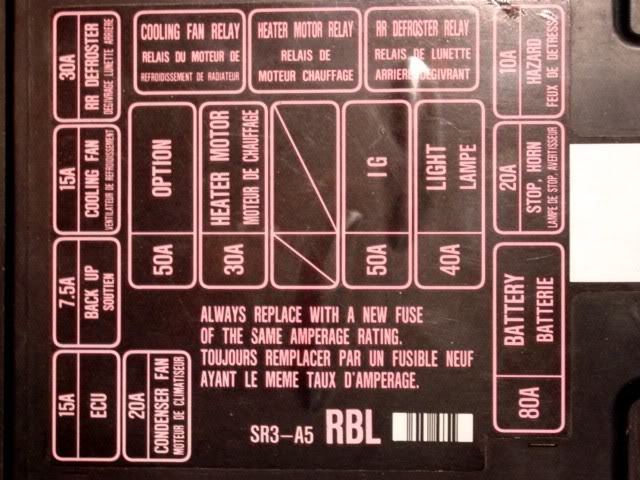
Skip the full battery disconnect and reset only the ECU by removing its fuse.
Steps
-
Turn Off Ignition
• Ensure the car is completely off -
Find the ECU Fuse
• Check the owner is manual or fuse box lid
• Common labels: ECU, Engine, PCM -
Remove the Fuse
• Use fuse pullers or tweezers -
Wait 10 to 15 Minutes
• Lets capacitors drain completely -
Reinstall the Fuse
• Push it back in firmly
Advantages
• Keeps radio presets, clock, and infotainment settings
• Less disruptive than full battery disconnect
Limitations
• Some ECUs have backup capacitors, reset may fail
• Will not clear permanent or emissions codes
• Effectiveness varies by make
Emergency Limp Mode Reset via Terminal Bridging
When your car is stuck in limp mode with no throttle response, this fast reset can restore power quickly.
When to Use It
• Vehicle has no acceleration
• You are stranded and need to drive to safety
• Battery disconnect did not help
How to Reset Limp Mode
-
Loosen the Negative Battery Cable
• Use a wrench to loosen the nut -
Disconnect and Isolate
• Remove the negative terminal completely -
Short the Terminals
• Use a metal wrench to briefly touch both positive and negative battery posts
• Hold for 1 to 2 seconds (a spark is normal) -
Reconnect and Restart
• Reattach the negative terminal
• Start the engine (throttle should respond)
Best For
• Chevrolet, GM, Ford, Chrysler models
• BMWs in throttle restriction
• Emergency recovery only
Ignition Cycling: Soft Reset Without Tools
A quick, no-tool method that mimics a software reboot.
How to Do It
- Turn ignition OFF
- Turn to ON (do not start)
- Wait 10 to 30 seconds
- Turn back to OFF
- Wait 10 seconds, then start the engine
Does It Work
• Clears pending codes on some Ford, GM, and Toyota models
• Fails on most modern cars (2015 and newer)
• Not reliable (check your owner is manual)
Drive Cycle Reset: Let the Car Clear Itself
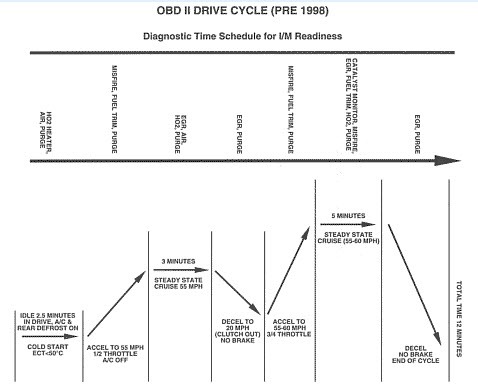
If the problem is fixed, your car may clear the code automatically after several successful drive cycles.
How It Works
The ECU runs readiness monitors to verify repairs. If no faults return, it erases the code automatically.
Steps to Complete a Drive Cycle
- Cold Start: Park overnight (8+ hours off)
- Idle 2 to 3 Minutes
- Accelerate to 55 mph and cruise for 3 to 5 minutes
- Coast down without braking
- Repeat city and highway patterns
- Complete 5 to 10 cycles
Best For
• Oxygen sensor codes
• EVAP system leaks (loose gas cap)
• P0420 catalytic converter efficiency
Use a Low-Cost OBD2 App Instead of a Scanner
Technically not no scanner, but a low-cost workaround that provides reliable results.
What You Need
• $8 to $15 Bluetooth OBD2 adapter (Amazon)
• Torque (Android) or OBD Fusion (iOS)
How to Clear Codes
- Plug adapter into OBD2 port (under dash)
- Pair with phone via Bluetooth
- Open app, tap Scan, view codes
- Tap Clear Codes after repair
Benefits
• Clears all stored codes
• Shows real-time data (RPM, temp, fuel trims)
• Can stay plugged in permanently
Why Some Codes Will Not Clear Without a Scanner
Not all codes can be erased with power loss. Here is why.
Non-Volatile Memory
Modern vehicles (especially post-2010) store emissions-related codes in non-volatile memory. These include P0420 (catalyst efficiency), P0440 (EVAP leak), and SPN 4364 (SCR catalyst fault in diesels). These codes survive battery disconnects and require a scanner to clear.
J1939 Systems (Diesel Trucks, Motorhomes)
Heavy-duty vehicles use J1939 protocol, which ignores power interruptions. Even fresh DEF will not help if there is an exhaust leak or sensor failure.
Vehicle-Specific Tips and Warnings
European Cars (BMW, Mercedes, Audi, VW)
• Highly sensitive to power loss
• Risks: Radio lock, window recalibration, sunroof failure
• BMW and Audi need anti-theft PIN after battery disconnect
• Use 15 to 20 minute battery disconnect (avoid terminal bridging)
Japanese Cars (Honda, Toyota, Nissan)
• Tolerant of resets
• Honda and Acura audio locks (get security code first)
• Toyota may need drive cycle to complete readiness monitors
• Power windows may lose auto-up function (hold switch up for 5 seconds)
North American (Chevy, Ford, Dodge)
• Robust to resets
• Chevrolet and GM SES light clears reliably
• Ford may need 2 to 3 drive cycles to confirm repair
• No major locks, but radio presets lost
Common Myths Debunked
Myth: Disconnecting the Battery Erases All Codes
False. Only clears volatile memory. Permanent and emissions codes return if fault persists.
Myth: Touching Terminals Clears Codes
Dangerous myth. Shorting battery posts risks blown fuses, ECU damage, fire, or explosion. Never do this.
Myth: Any Code Can Be Cleared Without a Scanner
No. Modern vehicles, especially diesels, lock emissions codes. You need a scanner or dealer tool.
Risks and Side Effects
| Risk | How to Avoid |
|---|---|
| Radio lockout | Get security code before disconnect (Honda, BMW) |
| Lost adaptive learning | Drive 50 to 100 miles to relearn idle, fuel trims |
| Disabled windows or sunroof | Reinitialize by holding switch |
| Clock reset | Reset manually after reconnecting |
| CAN bus errors | Avoid frequent resets on European cars |
When to Use a Scanner (or Professional Help)
Use a scanner if the light returns after reset, vehicle is post-2010, you drive a diesel or truck, or code is emissions-related. See a mechanic if car enters limp mode repeatedly, multiple codes appear, or you smell exhaust in the cabin.
Frequently Asked Questions About Resetting Car Codes Without a Scanner
Does disconnecting the battery always clear check engine codes?
No. Disconnecting the battery clears only volatile memory codes. Permanent emissions codes and many codes on post-2010 vehicles will remain even after battery disconnect. The check engine light will likely return if the underlying issue is not fixed.
How long does it take to reset car codes by battery disconnect?
The actual disconnect takes about 5 minutes, but you should wait 15 to 20 minutes with the battery disconnected for the ECU capacitors to fully discharge. Then plan for a 10 to 15 minute test drive to verify the reset worked.
Can I reset car codes without a scanner on a diesel vehicle?
It is much harder. Diesel vehicles, especially those with J1939 protocol, store codes in non-volatile memory that survives power loss. Emissions-related codes on diesel engines typically require a professional scanner like Cummins Insite or equivalent dealer tools.
Will resetting codes without fixing the problem cause damage?
Not directly, but the check engine light will return, often within minutes of driving. More importantly, driving with an unresolved issue can damage other components, reduce fuel economy, and cause your vehicle to fail emissions testing.
Can I use ignition cycling to reset car codes on modern cars?
Ignition cycling rarely works on modern vehicles (2015 and newer). Most newer ECUs do not respond to this method. Battery disconnect or using an OBD2 adapter are far more reliable options for newer vehicles.
Do I need a scanner to pass emissions testing?
Yes, in most cases. A lit check engine light results in automatic failure during emissions inspections. While you can suppress the light with battery disconnect, the code may still be flagged by the emissions testing equipment, and the underlying issue must be resolved to pass.
Key Takeaways for Resetting Car Codes Without a Scanner
You can reset car codes without a scanner using battery disconnection, fuse removal, ignition cycling, or drive cycles. Battery disconnect with horn discharge is the most effective universal method for pre-2010 gasoline vehicles. These methods suppress the check engine light but do not repair the underlying problem; if the fault remains, the code will return. For reliable results, especially on modern vehicles, consider a $9 OBD2 Bluetooth adapter with a smartphone app. Always diagnose and fix the root cause to ensure vehicle performance, fuel efficiency, and emissions compliance.