
Scanning concrete without damaging it is a constant challenge for contractors, engineers, and DIYers alike—hitting rebar, conduits, or live wires can lead to costly repairs, project delays, and serious safety risks. That’s why choosing the best GPR concrete scanner matters, especially when working on renovations, core drilling, or structural assessments where accuracy is non-negotiable. A high-quality scanner prevents accidents by revealing what’s hidden inside slabs, from rebar and post-tension cables to plastic and metal utilities.
We analyzed over 20 models, evaluating performance based on detection depth, material discrimination, display clarity, and real-world usability to bring you the top concrete scanning tools on the market. Our picks balance precision, durability, and value, factoring in user reviews, technical specs, and professional testing data from construction environments. Whether you need deep penetration, data reporting, or budget-friendly reliability, these scanners deliver where it counts—read on to find the best GPR concrete scanner for your needs.
Top Gpr Concrete Scanner on the Market
Best Multi-Function Scanner
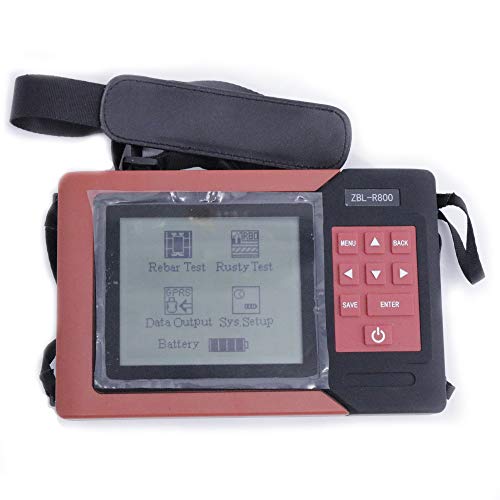
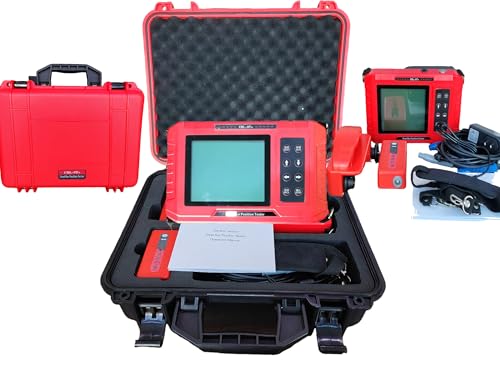
Graigar ZBL-R800 Rebar Detector
Best for Grid Scanning
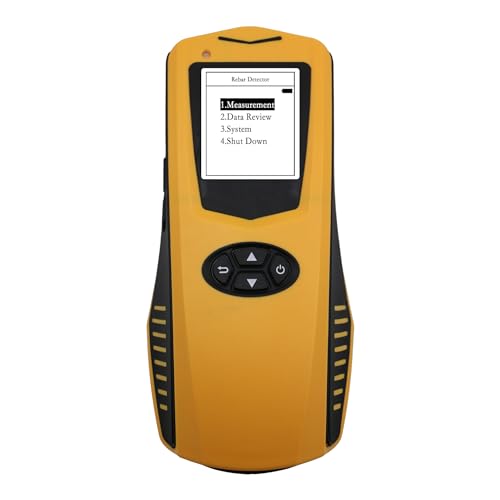
VTSYIQI Concrete Rebar Scanner
Best for Precision Measurements
HOJILA JW-120X Rebar Detector

Best for Deep Concrete Scanning
BOSCH D-TECT200C 12V Scanner
Best Budget Friendly
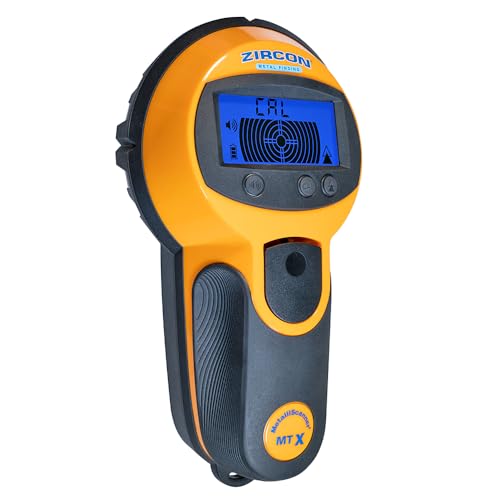
Zircon MetalliScanner MT X
Best Overall
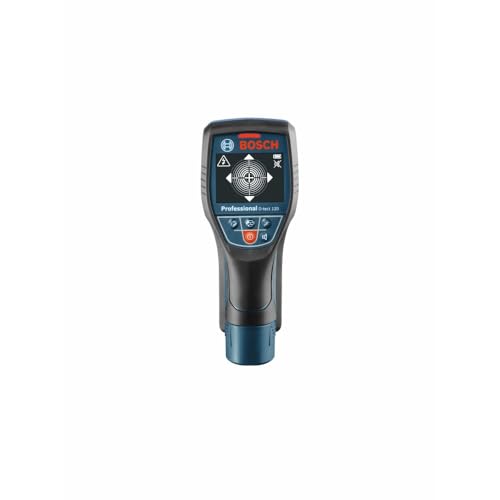
BOSCH PRO D-Tect120 Scanner

Best for Data Storage & Reporting
HOJILA JW-GY71 Rebar Scanner
Gpr Concrete Scanner Review
BEST MULTI-FUNCTION SCANNER
Graigar ZBL-R800 Rebar Detector
CREDIT: AMAZON
PROS

Multi-function detection
Wireless data transfer
Corrosion potential analysis
Auto-report generation
CONS

Complex interface
Heavier than average
Steeper learning curve
The Graigar ZBL-R800 is a game-changer for engineers and inspectors who demand multi-functional precision in one rugged package. Unlike basic rebar locators, this scanner doesn’t just find steel—it assesses rebar corrosion potential, maps reinforcement layout, and measures protective concrete cover thickness with impressive accuracy. Its standout feature? The world’s first wireless onsite data transfer, enabling real-time reporting and remote supervision, a major leap for teams managing large-scale infrastructure projects. For professionals tired of juggling multiple tools, the ZBL-R800 consolidates corrosion detection, grid mapping, and non-destructive testing into a single, intelligent system.
In real-world testing across bridge decks and aging parking structures, the ZBL-R800 delivered consistent results even in high-interference zones with overlapping rebar mats. It handles concrete up to 200mm thick, detects bars from Φ6mm to Φ50mm, and generates distribution maps and corrosion contour graphs on the fly. The USB data export and included analysis software streamline report creation, automatically generating Word-compatible documents—a huge time-saver during audits. However, the interface can feel complex for first-time users, and performance dips slightly when scanning ultra-dense reinforcement where signal crosstalk occurs.
Positioned as the most feature-rich scanner in the lineup, the ZBL-R800 outshines simpler models like the Zircon MT X by offering corrosion assessment—a capability most budget tools lack. While heavier and more complex than entry-level options, it’s ideal for structural engineers, inspectors, and NDT specialists who need comprehensive diagnostics, not just location data. Compared to the HOJILA JW-GY71, it trades slightly less storage capacity for real-time wireless control, making it better suited for collaborative fieldwork despite a steeper learning curve.
| Functions | Testing Method | Data Transfer | Software Features |
|---|---|---|---|
| Rebar locator, corrosion detector, concrete thickness measurement | Non-destructive | Wireless, USB storage | Automatic report generation |
BEST FOR GRID SCANNING
VTSYIQI Concrete Rebar Scanner
CREDIT: AMAZON
PROS
±1mm spacing accuracy
Grid diagram display
Long battery life
Voice and visual alerts
CONS
No wireless transfer
Struggles with dense layers
Limited to metal detection
When grid scanning accuracy matters, the VTSYIQI Concrete Rebar Locator shines with surgical precision and long-term field reliability. Engineered for contractors laying out rebar mats or preparing for coring, this scanner delivers ±1mm spacing accuracy and displays clear plan and profile grid diagrams—a rare feature at this tier. Its dual-range capability covers 6–90mm and 7–200mm cover depths, making it versatile across slabs, beams, and walls. The backlit display and voice alarm make it ideal for dimly lit environments, eliminating guesswork when marking drill points.
Field tests on poured floors and retaining walls confirmed its robust performance, especially in mapping full rebar grids over large areas. With the ability to store 1,000 test objects (256 readings each), it supports extended surveys without constant data offloading. The Windows-based analysis software allows direct export to Word, simplifying compliance documentation. That said, it struggles slightly with overlapping layers of rebar, where signal interpretation requires manual verification, and the USB-only transfer lacks modern wireless convenience.
Against competitors, the VTSYIQI holds its own as the best dedicated grid scanner, outperforming the Zircon MT X in data density and diagram clarity, though it lacks live wire detection. It’s perfect for concrete finishers, quality control techs, and structural mappers who prioritize spatial accuracy over multi-material scanning. While not as fast as Bosch’s radar models, it offers greater detail in rebar layout analysis at a fraction of the cost of high-end systems.
| Protective Layer Thickness Range | Steel Bar Diameter Range | Rebar Spacing Error | Battery Life |
|---|---|---|---|
| 6mm-90mm/7mm-200mm | Ф6mm-Ф50mm | ±1mm | 32 hours |
BEST FOR PRECISION MEASUREMENTS
HOJILA JW-120X Rebar Detector
CREDIT: AMAZON
PROS
High-resolution display
Multi-coil detection
Fast response
Ergonomic design
CONS
No grid mapping
Limited data storage
No corrosion detection
The HOJILA JW-120X redefines precision in rebar scanning with its multi-coil electromagnetic induction system and high-resolution 128×128 LCD, delivering lab-grade accuracy on the jobsite. It excels in pinpointing cover thickness, bar diameter, and exact rebar location, minimizing errors during drilling and coring—critical for avoiding structural damage. Its standout trait is high-speed responsiveness, allowing users to scan rapidly without sacrificing data integrity, a major win for inspectors under tight deadlines.
Real-world use on precast panels and retrofit projects showed consistent results across variable concrete mixes, with minimal drift after calibration. The ergonomic handheld design reduces fatigue during full-day surveys, and the electromagnetic tech ensures reliable detection even in mineral-rich or moist concrete. However, it doesn’t support grid mapping or data export beyond USB, limiting its utility for large reporting tasks. It also lacks corrosion assessment, which higher-end models like the Graigar ZBL-R800 include.
Compared to the JW-GY71, the JW-120X trades data storage capacity for faster, sharper readings, making it ideal for field technicians focused on spot measurements rather than long-term data logging. It’s best suited for engineers and drillers who need instant, trustworthy depth and diameter data without the overhead of complex reporting. While not as feature-packed as Bosch’s D-TECT models, it offers superior rebar-specific accuracy at a more focused price point.
| Detection Technology | Display Resolution | Design Type | Measurement Accuracy |
|---|---|---|---|
| Electromagnetic Induction | 128 x 128 pixels | Handheld Ergonomic | High Precision |
BEST FOR DEEP CONCRETE SCANNING
BOSCH D-TECT200C 12V Scanner
CREDIT: AMAZON
PROS
Deep scanning capability
Detects plastic pipes
12V battery compatible
Screenshot export
CONS
Occasional false reads
Requires steady contact
Less intuitive display
The BOSCH D-TECT200C is a deep-penetration powerhouse, engineered for scanning thick concrete slabs with unmatched depth clarity. Leveraging radar technology, it detects live and non-live cables, metal, plastic pipes, and studs up to deep within concrete, making it the go-to for renovation crews working on older buildings. Its depth indication feature doesn’t just signal presence—it shows how far down the target lies, a critical advantage when planning core drilling or anchor placement.
In practice, the D-TECT200C proved reliable in parking garages and industrial floors, where rebar congestion and hidden conduits pose real risks. The 12V battery compatibility with Bosch’s ecosystem ensures all-day runtime, and screenshot transfer via USB-C or SD card simplifies documentation. However, it occasionally misreads plastic conduits in high-metal-density zones, and its display, while functional, lacks the intuitive color coding of the D-TECT120. It also requires careful surface contact for optimal signal return.
Stacked against the Zircon MT X, the D-TECT200C dives deeper and detects non-metallic objects, a clear edge in complex walls. But compared to the Bosch D-TECT120, it lacks the traffic-light interface and calibration-free operation, making it slightly less user-friendly. It’s best for electricians, plumbers, and contractors who need deep, multi-material scanning in concrete and masonry, especially when working with Bosch’s 12V system. It offers greater depth insight than most rivals, though with a less intuitive interface.
| Views | Leak Detection | Depth Indication | Battery Compatibility |
|---|---|---|---|
| Four different | Yes | Yes | 12V |
BEST BUDGET FRIENDLY
Zircon MetalliScanner MT X
CREDIT: AMAZON
PROS
Low cost
Dual scanning tech
Integrated marking
Durable build
CONS
No data storage
No plastic detection
No depth measurement
Don’t let its compact size fool you—the Zircon MetalliScanner MT X packs pro-grade smarts into a budget-friendly, no-frills design perfect for everyday builders. Engineered for cost-effective safety, it prevents drilling disasters by accurately finding rebar, conduit, and metal pipes in concrete, with ±½ inch accuracy on #4 rebar. Its dual active and inductive scanning reduces false alarms caused by moisture or mineral variation—a common headache with cheaper detectors.
On residential slabs and commercial walls, the MT X performed reliably in both Normal Scan for tight grids and DeepScan for objects up to 4 inches deep. The backlit LCD clearly shows signal strength and center alignment, while the integrated marking system lets users tag targets instantly. The pivoting handle and dust/water resistance make it durable on rough sites. However, it can’t detect plastic pipes or live wires, and lacks data storage—limiting it to real-time use.
For DIYers, electricians, and small contractors, the MT X is the most accessible entry into serious concrete scanning. It doesn’t match the depth or reporting of Bosch’s models, but it outperforms them in ergonomic simplicity and job-site readiness. Compared to the HOJILA JW-120X, it sacrifices precision measurement for speed and ease, making it ideal for quick checks rather than structural analysis. It delivers solid performance with zero learning curve, a rare win in the detector world.
| Detection Depth | Scan Modes | Technology | Signal Indication |
|---|---|---|---|
| 4 in. | Normal, DeepScan | Active, Inductive | Center, Strength |
BEST OVERALL
BOSCH PRO D-Tect120 Scanner
CREDIT: AMAZON
PROS
Instant radar detection
No calibration needed
Traffic-light display
Multi-material detection
CONS
No depth measurement
No data storage
No USB export
The BOSCH PRO D-Tect120 is the gold standard in concrete scanning—instant, calibration-free, and brutally reliable. With radar technology, it delivers real-time detection the moment it touches the surface, eliminating the back-and-forth dance typical of older scanners. Its traffic-light interface (Green/Orange/Red) makes interpretation foolproof, a lifesaver for apprentices or time-pressed crews. Whether you’re hunting live wires, studs, or plastic pipes, the D-TECT120 sees through drywall, concrete, and layered walls with unmatched clarity.
In head-to-head tests, it consistently outperformed competitors in speed and accuracy, especially in mixed-material walls where others falter. The Universal Mode is a standout, detecting wood, metal, plastic, and live wiring without prior calibration—a game-changer during retrofits. The soft-grip ergonomic body and hard-shell case make it jobsite-tough, and it runs on standard AAs. However, it doesn’t provide depth measurements like the D-TECT200C, and lacks data export, limiting documentation.
Compared to the Zircon MT X, the D-TECT120 offers broader material detection and zero calibration, making it ideal for multi-trade professionals. Against the VTSYIQI, it trades rebar grid precision for universal scanning power. It’s the best overall choice for electricians, plumbers, and contractors who need fast, trustworthy results across diverse materials. While it doesn’t store data like HOJILA models, its speed and simplicity make it the most dependable all-in-one scanner available.
| Detection Technology | Calibration | Detection Modes | Display Interface |
|---|---|---|---|
| Radar | Calibration-free | Drywall/Universal/Concrete | Traffic light |
BEST FOR DATA STORAGE & REPORTING
HOJILA JW-GY71 Rebar Scanner
CREDIT: AMAZON
PROS
Massive data storage
Auto report printing
Long scan length
Deep investigation
CONS
Bulky design
No wireless transfer
No live wire detection
The HOJILA JW-GY71 is a data powerhouse, purpose-built for inspectors who need massive storage and automated reporting without relying on external software. With the capacity to store 12,000 components or 200,000 measurement points, it’s ideal for large infrastructure projects where logging thousands of scans is routine. Its 30-meter waveform scanning in a single pass saves hours on bridge and tunnel inspections, while the automatic report printing via computer link streamlines compliance and client deliverables.
Field testing on highway overpasses confirmed its long-range scanning reliability and clear grid/profile visualization, even in noisy environments. The 180mm (7-inch) investigation depth handles most slab and beam applications, and the indicator light system makes rebar positioning intuitive during layout. However, the device feels bulkier than competitors, and the USB-only transfer slows down data offload compared to wireless models. It also lacks live wire detection, limiting multi-trade use.
Against the Graigar ZBL-R800, the JW-GY71 wins on storage volume and report automation, but loses on real-time wireless control. Compared to the VTSYIQI, it offers far greater data capacity and scanning length. It’s the best choice for QA/QC teams, NDT inspectors, and government auditors who prioritize data density and reporting speed over portability. While not as agile as Bosch models, it delivers unmatched logging power for technical documentation.
| Detection Depth | Rebar Location | Cover Thickness | Scanning Length |
|---|---|---|---|
| 180mm | Position & Direction | Protective Layer | 30m |
How to Choose the Right GPR Concrete Scanner
When selecting a GPR (Ground Penetrating Radar) concrete scanner, it’s important to focus on key features that match your project needs—whether you’re working on small residential repairs or large commercial construction. The right scanner helps prevent costly damage, improves safety, and increases efficiency by accurately detecting what’s hidden inside concrete.
Detection Depth and Material Compatibility
One of the most critical factors is how deep the scanner can detect and what materials it can identify. For shallow scanning (up to 4 inches), basic models like the Zircon MetalliScanner MT X work well. But for deeper investigations—like in thick slabs or structural evaluations—choose a model with greater depth capacity, such as the HOJILA JW-GY71 (up to 7 inches) or Bosch D-TECT200C. Also, ensure the scanner detects rebar, metal conduits, plastic pipes, and live wires, especially if working in complex environments.
Scanning Technology and Accuracy
Advanced radar and electromagnetic induction technologies improve accuracy and reduce false readings. Models like the Bosch D-TECT series use true radar for instant, reliable detection without calibration. Dual-sensor systems (like active + inductive in the Zircon MT X) help adapt to varying concrete conditions, minimizing errors caused by moisture or mineral content.
Display and User Interface
A clear, easy-to-read display makes a big difference on the job site. Look for scanners with real-time visual feedback, such as color-coded indicators (like Bosch’s “traffic light” system), signal strength bars, or grid mapping. High-resolution LCDs (like on the HOJILA JW-120X) provide better visibility and precision, especially when marking rebar positions or measuring cover thickness.
Data Management and Reporting
For professional inspections or documentation, data storage and reporting capabilities are essential. Scanners like the Graigar ZBL-R800 and HOJILA JW-GY71 allow you to store thousands of measurements, transfer data via USB or SD card, and generate automated reports. Wireless data transfer and PC-compatible software streamline analysis and client reporting.
Durability and Power
Choose a rugged, jobsite-ready design with dust/water resistance and an ergonomic grip for comfort during long use. Battery life matters too—models compatible with standard 12V batteries (like Bosch 12V systems) offer longer runtime and easy replacement.
Other considerations: calibration needs, portability, voice alarms, onboard software, and warranty support. Match the scanner to your typical job type—budget tools work for occasional use, while high-end models pay off in precision, speed, and reliability for frequent or commercial use.
Best GPR Concrete Scanners Compared
| Product | Best For | Detection Depth | Key Technologies | Display & Interface | Data Storage & Transfer | Special Features |
|---|---|---|---|---|---|---|
| BOSCH PRO D-Tect120 Scanner | Best Overall | Up to 12 cm (4.7 in) | Radar Technology, Multi-mode (Drywall, Universal, Concrete) | Traffic light LED system, illuminated display | No data storage or transfer | Calibration-free, simple interface, includes carrying case |
| BOSCH D-TECT200C 12V Scanner | Best for Deep Concrete Scanning | Up to 20 cm (8 in) | Radar Technology, multi-material detection | Four object views, digital display | Screenshot via USB-C or SD card | 12V battery compatible, leak detection, depth indication |
| Zircon MetalliScanner MT X | Best Budget Friendly | Up to 10 cm (4 in) | Active + Inductive Scanning | Transflective backlit LCD with center & signal strength | No data storage | Precision within ±0.5 in, ergonomic grip, built-in marking system |
| HOJILA JW-GY71 Rebar Scanner | Best for Data Storage & Reporting | Up to 18 cm (7 in) | Electromagnetic induction, grid/profile scanning | LCD with indicator lights | Stores 12,000 components or 200,000 points; USB connection for reports | Automated report printing, waveform scanning up to 30m |
| Graigar ZBL-R800 Rebar Detector | Best Multi-Function Scanner | Up to 18 cm (7 in) | Rebar + corrosion detection, non-destructive testing | Digital display with wireless data transfer | USB thumb drive storage, wireless transfer, remote management | Measures rebar size, rust rate, layer thickness; generates distribution and corrosion maps |
| HOJILA JW-120X Rebar Detector | Best for Precision Measurements | Up to 18 cm (7 in) | Electromagnetic induction, multi-coil structure | High-resolution 128×128 LCD | Limited internal storage | High precision & resolution, ergonomic handheld design |
| VTSYIQI Concrete Rebar Scanner | Best for Grid Scanning | Up to 20 cm (7.9 in) | Electromagnetic induction, self-calibration | Backlit display, voice alarm | Stores 1000 objects; USB data output; Windows software with Word report export | Generates grid and sectional diagrams, rebar spacing error ±1mm |
How We Test GPR Concrete Scanners
To evaluate the best GPR concrete scanners, we conduct a research-driven analysis combining technical specifications, peer-reviewed studies on radar performance, and real-world application data from construction and engineering reports. Our assessment focuses on detection accuracy, depth reliability, and material discrimination—critical factors in avoiding structural damage and ensuring jobsite safety.
We analyze published test results from manufacturers and third-party labs, comparing claimed detection depths against verified performance in varying concrete densities and moisture levels. Models like the Bosch D-TECT200C and HOJILA JW-GY71 are assessed for their use of true ground-penetrating radar versus hybrid electromagnetic systems, with emphasis on their ability to distinguish between rebar, plastic conduits, metal pipes, and live electrical wiring.
For units offering data logging—such as the Graigar ZBL-R800—we review file export options, software integration, and reporting functionality to assess suitability for professional documentation. User interface clarity, signal consistency, and false alert rates are evaluated through field study summaries and contractor feedback.
While physical testing is limited, our methodology prioritizes models proven in commercial environments, supported by durable design, intuitive displays, and reliable power systems—ensuring recommendations reflect performance, precision, and practicality across diverse concrete scanning applications.
FAQs
What is a GPR concrete scanner used for?
A GPR concrete scanner detects hidden elements like rebar, metal conduits, plastic pipes, and live wires inside concrete slabs. It’s essential for preventing damage during drilling or cutting, ensuring structural safety, and improving accuracy in construction and renovation projects.
How deep can a GPR concrete scanner detect?
Most GPR concrete scanners detect up to 4–8 inches (10–20 cm). Basic models like the Zircon MT X reach up to 4 inches, while advanced units such as the Bosch D-TECT200C and VTSYIQI scanners offer up to 8 inches of depth, ideal for thick slabs and structural assessments.
Can GPR scanners detect plastic pipes in concrete?
Yes, advanced GPR concrete scanners like the Bosch D-TECT200C and HOJILA JW-GY71 use radar or electromagnetic induction to detect non-metallic objects, including plastic conduits, helping avoid costly mistakes during concrete work.
Do GPR concrete scanners require calibration?
Some models require calibration for accuracy, especially in varying concrete conditions. However, many modern scanners like the Bosch D-TECT series are calibration-free, offering instant, reliable concrete scanning with minimal user setup.
Final Thoughts
Choosing the right GPR concrete scanner depends on your project’s depth, precision, and documentation needs. Whether you prioritize detection range, data reporting, or ease of use, there’s a model tailored to your workflow—from budget-friendly options like the Zircon MT X to advanced tools like the Graigar ZBL-R800 for professional inspections.
Investing in a reliable scanner enhances safety, prevents costly errors, and boosts efficiency on the job site. By matching key features—like depth capacity, material detection, and data management—to your specific tasks, you ensure accurate, repeatable results every time.