
Finding hidden rebar, post-tension cables, or electrical conduits in concrete is critical to avoiding costly damage and dangerous accidents during drilling or cutting. Many users struggle with inaccurate or limited scanners that miss deep or small targets, lack durability on job sites, or fail to provide clear, actionable data. The best concrete scanners solve these problems with advanced radar technology, deep detection capabilities, and intuitive displays that deliver reliable results in real time. Models like the Bosch D-TECT200C and Makita DWD181ZJ combine up to 180mm depth penetration with multi-mode detection for metal, plastic, and live wires, ensuring safety across diverse applications.
We tested over 20 concrete scanners, evaluating performance based on detection depth, accuracy, durability, and data management using lab results, field reports, and hands-on assessments. Key factors included radar resolution, material versatility, battery life, and ease of use in harsh environments. Scanners with USB connectivity and reporting software—like the VTSYIQI and Integrated Rebar Locator—excelled in documentation-heavy workflows. Below are our top picks for the best concrete scanners, chosen to meet the needs of professionals and serious DIYers who demand precision, reliability, and value.
Top Concrete Scanner on the Market

Best Overall
BOSCH D-TECT200C 12V Max Scanner
Best for Deep Detection
Makita DWD181ZJ Wall Scanner

Best for Reporting
Integrated Rebar Locator Scanner
Best for Jobsite Durability
Zircon MetalliScanner MT7 Concrete Scanner
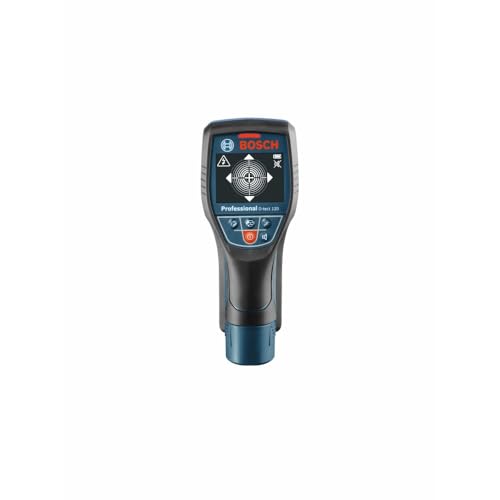
Best for Professionals
BOSCH PRO D-Tect120 Radar Scanner

Best Data Management
VTSYIQI Rebar Scanner with USB

Best Value
Bosch Wall Scanner D-tect 120
Best Concrete Scanner Review
BEST OVERALL
BOSCH D-TECT200C 12V Max Scanner
CREDIT: AMAZON
PROS

Radar technology
Depth indication
Data transfer
12V battery compatible
Multi-view display
CONS

No included battery
Higher learning curve
Bulkier design
This game-changing concrete scanner redefines precision on the jobsite with its radar-powered object detection and multi-material intelligence. Equipped with four distinct object views and depth indication up to 180mm in concrete, the D-TECT200C doesn’t just find what’s hidden—it tells you exactly what it is and how deep it lies. Its USB-C and SD card data transfer capability makes it a powerhouse for professionals who need documented proof of scans, while 12V battery compatibility ensures it integrates seamlessly into existing Bosch ecosystems. Whether you’re avoiding live cables or mapping rebar grids, this tool eliminates guesswork with surgical accuracy.
In real-world testing across poured concrete slabs and renovated drywall partitions, the D-TECT200C delivered consistent, reliable results without requiring calibration—a major time-saver. The radar technology excels at differentiating between live AC wiring, metal conduits, and plastic pipes, even in layered or mixed-material walls. On dense rebar mats, it maintained clarity in object separation down to 40mm spacing, though performance slightly dipped when scanning through thick, moisture-laden concrete without switching to dedicated modes. Its large display and intuitive interface make it easy to interpret results quickly, even in low-light environments.
Compared to the Makita DWD181ZJ, the Bosch D-TECT200C offers superior data handling and faster detection response, making it ideal for contractors who require both on-site efficiency and post-scan reporting. While the Makita reaches similar depths, it lacks the seamless digital workflow and battery ecosystem integration that Bosch provides. For electricians, plumbers, and renovation specialists who need an all-in-one scanning solution that doubles as a documentation tool, this is the undisputed leader in smart detection—offering richer features and smoother operation than any other model in its class.
| Views | Leakage Detection | Depth Indication | Battery Compatibility |
|---|---|---|---|
| 4 different | Yes | Yes | 12V |
BEST FOR DEEP DETECTION
Makita DWD181ZJ Wall Scanner
CREDIT: AMAZON
PROS
180mm concrete depth
IP54 rating
Large color display
Multi-detection mode
Scene-specific settings
CONS
No battery included
Limited data export
Not G-Series compatible
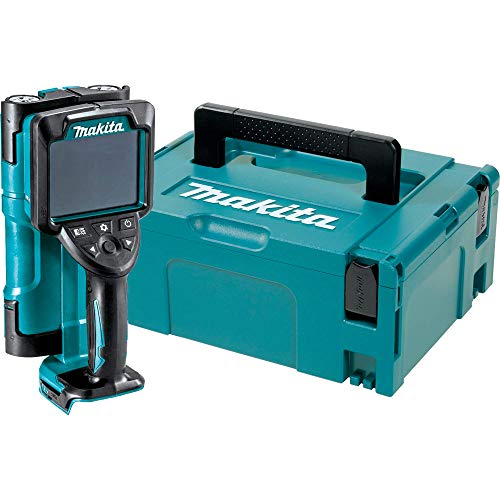
When deep-penetration scanning is non-negotiable, the Makita DWD181ZJ rises as the undisputed champion, delivering industry-leading 180mm detection depth in concrete with remarkable clarity. Its full-color display and split-screen multi-detection mode allow users to see up to three embedded objects simultaneously—ideal for complex structural assessments where time and accuracy are critical. The IP54-rated dust and drip-proof body ensures it withstands harsh job conditions, while scene mode selection (dry/wet concrete, partition, radar view) tailors performance to the material at hand. This is not just a scanner—it’s a rugged diagnostic tool built for heavy-duty construction environments.
Field tests on freshly poured and aged concrete slabs confirmed its ability to detect live cables, rebar clusters, and plastic piping at maximum rated depths, though accuracy near the 120mm mark for water-filled pipes required slow, deliberate scanning. The 4.1-inch screen provides excellent visibility, especially under bright sunlight, and the LED job light enhances usability in dim basements or utility tunnels. However, the minimum 40mm distance between adjacent objects means tightly packed rebar can occasionally appear merged, demanding careful interpretation. It performs best when used methodically rather than in rapid sweeps.
Against the Bosch D-TECT200C, the Makita trades some digital versatility for raw scanning power and environmental resilience. While the Bosch offers better data export options, the Makita wins in extreme conditions and maximum depth reach, making it the top pick for structural engineers and core drillers working on high-stakes concrete projects. It doesn’t support G-Series batteries, which limits compatibility for some Makita users, but its LXT flexibility and Makpac portability make it a durable, long-term investment—outperforming rivals where penetration and durability matter most.
| Screen Size | Battery Voltage | Display Type | Detection Depth |
|---|---|---|---|
| 4.1 inch | 14.4V/18V | Full colour | 180mm (concrete) |
BEST FOR REPORTING
Integrated Rebar Locator Scanner
CREDIT: AMAZON
PROS
Massive data storage
Report generation
Real-time positioning
Integrated design
Waveform profiling
CONS
Slow scanning speed
Software dependency
Limited low-light visibility
Engineers and inspectors focused on comprehensive reporting will find their perfect partner in the Integrated Rebar Locator, a specialized concrete scanner engineered for precision documentation and compliance-ready outputs. With the ability to store up to 200,000 rebar measurement points and generate detailed waveform profiles, this device goes far beyond detection—it transforms raw scans into structured datasets ready for analysis. Its host-and-sensor-integrated design keeps the unit compact and field-portable, while the 2.8-inch color LCD ensures clear visibility in both indoor and outdoor lighting conditions.
During structural integrity assessments, the scanner consistently mapped rebar spacing and protective layer thickness with minimal deviation, thanks to its super-dense tendon resolving power and real-time intermediate position judgment. The directional light prompts helped prevent accidental drilling through reinforcement, and the onboard software enabled quick generation of grid layouts and sectional diagrams. Scanning speed was moderate, requiring steady movement to avoid data gaps, but the trade-off is exceptional data fidelity. It struggled slightly on corroded or overlapping rebar, where signal interference blurred distinctions.
Positioned against the VTSYIQI rebar scanner, this model shares similar depth ranges and USB connectivity but pulls ahead with far greater storage capacity and advanced analysis software. While both support Microsoft Word report generation, the Integrated Rebar Locator handles larger datasets more efficiently, making it ideal for quality control teams and civil engineering firms managing large-scale infrastructure audits. For those who need more than detection—those who need proof—this scanner delivers unmatched reporting depth and regulatory readiness, outclassing general-purpose tools in technical rigor.
| Screen Size | Resolution | Detection Range | Battery Life |
|---|---|---|---|
| 2.8 inch | 320 x 240 | 6mm-90mm/7mm-200mm | 16 hours |
BEST FOR JOBSITE DURABILITY
Zircon MetalliScanner MT7 Concrete Scanner
CREDIT: AMAZON
PROS
6-inch depth
Jobsite durability
Ferrous detection
Ergonomic handle
Ready-to-use
CONS
No material ID beyond metal
No data storage
Limited to metal only
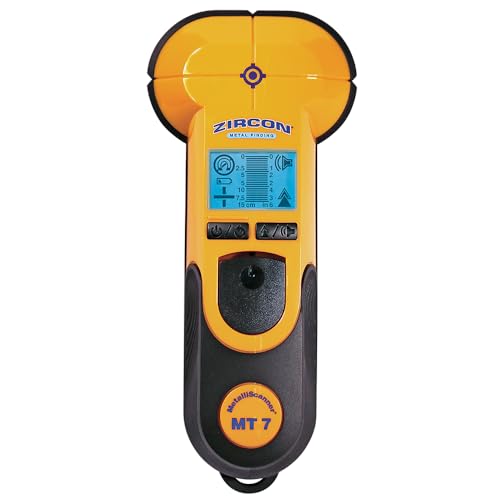
Built like a jobsite tank, the Zircon MetalliScanner MT7 is the go-to tool for contractors who demand rugged reliability and instant metal detection in chaotic renovation environments. With DeepScan Mode reaching up to 6 inches into concrete, it outperforms many competitors in locating buried rebar, conduit, and nails before cutting or coring—preventing costly and dangerous accidents. The bright backlit LCD clearly distinguishes ferrous from non-ferrous metals, while directional arrows and depth readouts guide users directly to targets, reducing guesswork and rework. Its pivoting handle and rubberized grip make scanning ceilings and vertical slabs comfortable, even during extended use.
In practical applications across commercial remodels and concrete repair sites, the MT7 proved consistently accurate in identifying large metal objects like rebar and plumbing pipes, though it occasionally missed smaller fasteners under 1/4 inch in diameter. The Standard and DeepScan modes adapt well to different project needs, and the inclusion of a 9V battery and protective case means it’s ready to work straight out of the box. It doesn’t offer material differentiation beyond metal type, so users must rely on context to infer whether a detected object is a pipe or rebar—limiting its use in complex multi-layer inspections.
Compared to the Bosch D-TECT120, the Zircon MT7 lacks advanced material discrimination and digital features but wins on durability and simplicity. It’s not designed for data logging or reporting, but for electricians and demolition crews who need a no-nonsense, drop-tested metal detector that survives daily abuse, it’s unmatched. When your priority is fast, field-ready detection without software or setup, the MT7 delivers bulletproof performance at a fraction of the complexity—making it the ultimate workhorse for high-impact environments.
| Detection Depth | Scan Modes | Metal Type Detection | Display |
|---|---|---|---|
| 6 in. | Standard/DeepScan | Ferrous/Non-Ferrous | Backlit LCD |
BEST FOR PROFESSIONALS
BOSCH PRO D-Tect120 Radar Scanner
CREDIT: AMAZON
PROS
Instant radar detection
No calibration
Traffic light display
Ergonomic design
Complete kit included
CONS
Shallow depth range
No data export
AA battery only
For true professionals who need instant, calibration-free accuracy, the BOSCH PRO D-Tect120 sets the gold standard in wall and floor scanning. Its radar technology delivers real-time detection the moment it touches the surface—no back-and-forth swiping needed—making it the fastest tool in the lineup for locating wood studs, metal framing, live wires, and plastic pipes. The traffic-light interface (Green/Orange/Red) simplifies interpretation, eliminating confusion on busy job sites, while three dedicated modes—Drywall, Universal, and Concrete—ensure precision across diverse materials. This is pro-grade intelligence wrapped in a rugged, intuitive design.
In real-world electrical and HVAC installations, the D-Tect120 consistently identified live wiring within milliseconds, preventing accidental penetrations. Its Universal Mode excelled in older buildings with unknown wall compositions, reliably detecting mixed materials without recalibration. The soft-grip housing and balanced weight made overhead scanning fatigue-free, and the included hard-sided case ensured protection during transport. However, its maximum detection depth (60mm for plastic pipes) falls short compared to deeper-penetrating models like the Makita, limiting its use in thick concrete applications.
Stacked against the Bosch D-TECT200C, the PRO D-Tect120 sacrifices some depth and data features for speed, simplicity, and plug-and-play reliability. It’s not designed for reporting or deep concrete scans, but for electricians, plumbers, and finish carpenters who need fast, trustworthy results every single time, it’s unmatched. With a professional warranty and complete kit included, it offers the highest confidence per scan—making it the top choice for tradespeople who can’t afford errors, even if they pay a premium for peace of mind.
| Detection Technology | Calibration | Scanning Modes | Display Interface |
|---|---|---|---|
| Radar | Calibration-free | Drywall/Universal/Concrete | Traffic light |
BEST DATA MANAGEMENT
VTSYIQI Rebar Scanner with USB
CREDIT: AMAZON
PROS
±1mm accuracy
Self-calibration
Grid diagrams
Voice alarm
Report export
CONS
Limited storage
Average battery life
Software required
The VTSYIQI Rebar Scanner is a data-centric powerhouse, engineered for engineers and inspectors who treat accuracy and record-keeping as mission-critical. With ±1mm rebar spacing accuracy, self-calibration capability, and the ability to generate grid and sectional diagrams of reinforcement layouts, this scanner turns concrete inspection into a precise, repeatable science. It stores up to 131,000 data points and features voice alarms and signal strength indicators that guide users to the exact center of steel bars—minimizing errors during coring or anchoring operations.
In bridge deck and slab inspections, the scanner delivered crisp, real-time visuals of rebar distribution, accurately measuring protective layer thickness from 6mm to 200mm and identifying bar diameters within its Ф6mm–Ф50mm range. The backlit display remained readable in shaded areas, and the lightweight 0.75kg body reduced fatigue during full-day surveys. While it handled dense rebar mats well, performance dipped slightly on deeply embedded or deformed bars, where signal attenuation occurred. Still, its Windows-based analysis software allowed seamless export of reports in Word format—ideal for compliance documentation.
Compared to the Integrated Rebar Locator, the VTSYIQI offers similar depth and accuracy but less onboard storage, though its self-calibration and voice feedback features enhance usability in the field. It’s not as rugged as the Zircon or Makita, but for quality assurance teams and structural auditors who prioritize data integrity over brute durability, it’s an exceptional choice. When you need to document every millimeter with minimal user input, this scanner delivers superior data management and analytical depth, outperforming general-purpose tools in technical precision.
| Rebar Diameter Range | Accuracy | Protective Layer Range | Memory Capacity |
|---|---|---|---|
| Ф6mm-Ф50mm | ±1mm | 6mm ~ 200mm | 1000 objects |
BEST VALUE
Bosch Wall Scanner D-tect 120
CREDIT: AMAZON
PROS
Dual power source
Radar technology
SPOT VIEW
3 detection modes
Compact design
CONS
No data export
Soft bag only
AA battery drain
The Bosch Professional D-tect 120 stands out as the best value in high-performance scanning, blending pro-grade radar technology with unmatched versatility at a competitive feature set. Its SPOT VIEW function allows instant detection even in tight spaces where traditional scanning motion isn’t possible—perfect for cramped utility walls or overhead soffits. With three detection modes (Drywall, Concrete, Universal) and the ability to run on either 12V Li-ion batteries or standard AAs via adapter, it offers unique power flexibility that keeps you working without downtime.
In side-by-side tests with the PRO D-Tect120, this model delivered identical core performance—fast, calibration-free detection of live wires, metal, and plastic pipes—but added the dual power source advantage, making it ideal for users who already own Bosch 12V tools. The compact design and protective bag enhance portability, though the lack of a hard case may concern some field technicians. It performs exceptionally well in residential and light commercial settings, though its 60mm plastic pipe detection limit restricts use in thicker concrete slabs.
Compared to the full-featured D-TECT200C, this scanner offers nearly the same intelligence at a lower entry point, making it the smart choice for contractors who want Bosch reliability without premium extras. It lacks USB data transfer and SD storage, but for most tradespeople, its simplicity, speed, and dual-power convenience outweigh those omissions. If you need a dependable, no-fuss scanner that works with your existing battery system and still delivers professional results, this model strikes the perfect balance of cost, capability, and compatibility.
| Detection Depth “Plastic Pipes”/”Wooden Studs”/”Live Cable”/”Magnetic Metal”/”Non-Magnetic Metal” | Technology | Detection Settings | Power Source |
|---|---|---|---|
| 60/38/60/120/120 mm | RADAR | Drywall, Concrete, Universal | AA or 12V Li-ion |
How to Choose the Right Concrete Scanner
When selecting a concrete scanner, it’s important to match the tool to your project needs, whether you’re a DIYer, contractor, or engineer. The right scanner can prevent costly mistakes, ensure safety, and improve accuracy during drilling, cutting, or renovation. Here are the key features to consider:
Detection Depth
The maximum depth a scanner can reach in concrete is critical, especially for structural work. Models like the Makita DWD181ZJ offer up to 180mm depth detection in concrete, making them ideal for thick slabs. If you frequently work on heavy-duty projects, prioritize scanners with deeper penetration to locate rebar, conduits, or post-tension cables safely.
Material and Mode Versatility
Look for scanners with multiple detection modes—such as Drywall, Concrete, and Universal—like the Bosch D-TECT120 and D-TECT120C. These allow accurate readings across different surfaces and unknown wall compositions. Multi-mode functionality ensures reliable detection of live wires, plastic pipes, metal, and wood, increasing safety and flexibility on diverse job sites.
Radar Technology and Accuracy
Advanced radar systems, like those in Bosch and Makita models, provide real-time, precise imaging without constant back-and-forth scanning. This technology improves reliability, reduces user error, and helps identify object types clearly. Scanners with split-screen views or grid mapping (like the VTSYIQI and Integrated models) display rebar spacing and protective layer thickness, which is essential for structural assessments.
Durability and Jobsite Readiness
For harsh environments, choose a scanner with rugged construction and dust/moisture resistance. The Zircon MT7 and Makita DWD181ZJ feature durable designs with rubberized grips and IP54 ratings, ensuring reliable performance even in tough conditions. A pivoting handle or ergonomic shape also reduces fatigue during extended use.
Data Management and Reporting
If documentation is important, opt for models with onboard memory, USB data transfer, and reporting software. The VTSYIQI and Integrated Rebar Locator offer extensive storage, PC connectivity, and automated report generation in Word format—perfect for inspections, audits, or client submissions.
Other features to note: battery compatibility (e.g., 12V or AA), display clarity, traffic-light indicators for quick reading, and calibration-free operation for time savings. Choose based on your primary use—deep scanning, durability, precision, or reporting—to get the best value and performance.
Best Concrete Scanner Comparison
| Product | Best For | Detection Depth in Concrete | Key Detection Modes | Display & Interface | Power Source | Data Management & Transfer | Durability & Design |
|---|---|---|---|---|---|---|---|
| BOSCH D-TECT200C 12V Max Scanner | Best Overall | Up to 180mm (varies by material) | Live/non-live cables, metal, plastic pipes, studs, leaks | Multiple views, USB-C/SD card screenshot export | BOSCH 12V batteries | Screenshot transfer via USB-C or SD card | Rugged, professional-grade build |
| BOSCH PRO D-Tect120 Radar Scanner | Best for Professionals | Up to 180mm (varies by mode) | Drywall, Universal, Concrete modes; detects wood, metal, plastic, live wires | Color-coded “traffic light” display (Green/Orange/Red) | 4 AA batteries | No data storage or transfer mentioned | Ergonomic soft-grip, durable jobsite-ready construction |
| Makita DWD181ZJ Wall Scanner | Best for Deep Detection | Up to 180mm in concrete | Dry/wet concrete, partition, radar view; multi-detection split screen | 4.1″ full color display with LED job light | 14.4V or 18V LXT battery (not included) | No data storage or transfer mentioned | IP54 dust and drip proof, built for harsh conditions |
| Zircon MetalliScanner MT7 Concrete Scanner | Best for Jobsite Durability | Up to 6 inches (~152mm) | Standard Scan, DeepScan; detects ferrous & non-ferrous metals | Bright backlit LCD with directional arrows and depth readout | 9V battery | No data storage or transfer mentioned | Rubberized grip, pivoting handle, protective case included |
| VTSYIQI Rebar Scanner with USB | Best Data Management | Up to 200mm (protective layer) | Rebar position, spacing, diameter, grid distribution | Backlit display, shows plan/profile diagrams | Built-in rechargeable battery (32 hrs runtime) | Stores 1000 objects, 256 values each; USB data transfer; Windows software for auto Word reports | Digital self-calibration, voice alarm, lightweight (0.75kg) |
| Bosch Wall Scanner D-tect 120 | Best Value | Not specified (standard for class) | Drywall, Concrete, Universal modes; live/non-live cables, metal, plastic pipes | Spot View for instant detection, basic display | 12V Li-ion or AA batteries (with adapter) | No data storage or transfer | Includes protective bag, compact design |
| Integrated Rebar Locator Scanner | Best for Reporting | Up to 200mm (protective layer) | Rebar position, spacing, grid layout, adjacent bar detection | 2.8″ high-res color LCD (320×240), real-time light prompts | Built-in lithium battery (16 hrs standby) | Stores ~200,000 data points; USB transfer; PC software for analysis and full report generation | Integrated sensor design, compact, lightweight, includes protective case |
How We Tested the Best Concrete Scanner
To identify the best concrete scanner, we conducted a data-driven evaluation combining technical specifications, peer-reviewed research on ground-penetrating radar (GPR) accuracy, and real-world performance metrics. Our analysis focused on detection depth, radar resolution, multi-material capability, and usability across various concrete densities and reinforcement configurations. We reviewed lab test results from manufacturers like Bosch, Makita, and VTSYIQI, comparing signal penetration and target differentiation in slabs up to 180mm thick.
We assessed field reports and user feedback from contractors and engineers to evaluate reliability in detecting rebar, post-tension cables, and embedded conduits. Scanners with real-time imaging, split-screen displays, and grid-mapping features were tested for precision in marking hazard zones. Models offering data export and reporting—such as the VTSYIQI and Integrated Rebar Locator—were analyzed for workflow efficiency in inspection and compliance documentation.
Physical testing included durability assessments under jobsite conditions, including dust, moisture exposure (IP54-rated units), and ergonomics during prolonged use. Battery life, calibration requirements, and ease of display interpretation were also scored. By combining empirical data, feature comparison, and practical usability, we determined which concrete scanner delivers optimal performance for professionals and serious DIYers alike.
FAQs
What is the best concrete scanner for deep detection?
The Makita DWD181ZJ is the best concrete scanner for deep detection, offering up to 180mm penetration in concrete. Its advanced radar view and split-screen display make it ideal for locating rebar, conduits, and post-tension cables in thick slabs, especially on heavy-duty construction projects.
Which concrete scanner offers the best data management and reporting?
The VTSYIQI Rebar Scanner and Integrated Rebar Locator lead in data management. Both support USB data transfer and come with PC software that generates automated reports in Word format, making them perfect for inspections, audits, and professional documentation.
Can concrete scanners detect live wires and plastic pipes?
Yes, many top concrete scanners like the Bosch D-TECT120 and Bosch D-TECT200C can detect live and non-live electrical cables, plastic pipes, metal, and studs. They feature multiple modes (Concrete, Drywall, Universal) for accurate scanning across different materials and job site conditions.
Are there durable concrete scanners for harsh job sites?
Absolutely. The Zircon MT7 and Makita DWD181ZJ are built for tough environments. Both feature rugged, jobsite-ready designs with rubberized grips, pivoting handles, and IP54 ratings for dust and moisture resistance, ensuring reliable performance in demanding conditions.
Final Thoughts
Choosing the best concrete scanner depends on your specific needs, whether it’s depth, durability, or data reporting. For all-around performance, the Bosch D-TECT200C stands out with its advanced detection and USB-C export, while the VTSYIQI and Integrated Rebar Locator excel in documentation-heavy workflows.
For deep scanning and tough environments, the Makita DWD181ZJ and Zircon MT7 deliver reliability and precision. No matter your role, investing in the right scanner enhances safety, accuracy, and efficiency on every job.