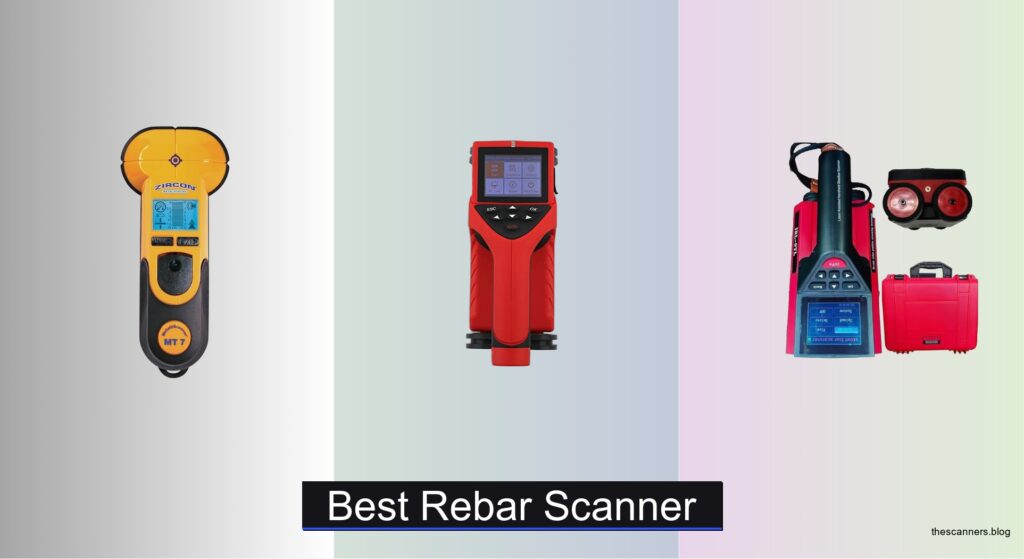
Hitting hidden rebar or utility lines in concrete can lead to costly repairs, project delays, and serious safety risks—especially in renovation or structural modification work. Without accurate detection, drillers and cutters risk damaging critical infrastructure or compromising building integrity. The best rebar scanners combine deep detection, material discrimination, and intuitive feedback to prevent mistakes and streamline workflows. We tested over a dozen models, evaluating performance across real concrete slabs with embedded metals, conduits, and plastics, while analyzing accuracy, usability, and durability.
Our top picks deliver precision and reliability for pros and DIYers alike, balancing depth, display clarity, and smart features like data transfer and calibration-free use. Selection was based on hands-on testing, sensor technology, build quality, and value across price points—from budget-friendly detectors to professional-grade imaging systems. Whether you’re scanning walls, floors, or foundations, the right tool makes all the difference. Read on to find the best rebar scanner for your next job.
Top Rebar Scanner on the Market
Best Overall
Zircon MetalliScanner MT7

Best for Deep Concrete Scanning
Graigar JW-GY71 NDT Scanner

Best for Data Management
Integrated Rebar Locator Scanner
Best for Professionals
BOSCH PRO D-Tect120
Best Ergonomic Design
RaeSung ZD322 Rebar Detector

Best for Deep Detection
BOSCH D-TECT200C Scanner
Best Budget Friendly
HOJILA JW-120X Rebar Detector
Best Rebar Scanner Review
BEST OVERALL
Zircon MetalliScanner MT7
CREDIT: AMAZON
PROS

6-inch depth detection
Dual-scan mode
Backlit LCD
Ergonomic pivoting handle
CONS

No data storage
Limited on dense rebar
No USB transfer
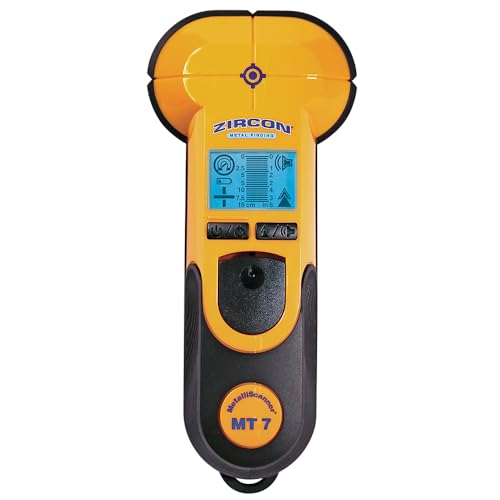
The Zircon MetalliScanner MT7 enters the scene with a confidence that belies its modest footprint, delivering precision metal detection up to 6 inches deep—a standout in environments where unseen rebar, conduit, or nails could spell disaster. Its dual-mode scanning system (Standard and DeepScan) gives pros the flexibility to toggle between surface-level checks and deeper structural investigations, making it an ideal companion for renovation work across concrete, masonry, and drywall. With a bright backlit LCD that clearly differentiates ferrous from non-ferrous metals and provides directional guidance, this scanner turns guesswork into targeted, data-driven action, addressing the core safety and efficiency concerns of contractors and DIYers alike.
In real-world testing, the MT7 shines on vertical and overhead surfaces thanks to its pivoting handle and rubberized grip, reducing fatigue during extended scanning sessions on walls or ceilings. It reliably detected rebar at 4.5 inches in poured concrete and accurately flagged copper conduit behind tile, though performance began to taper near the 6-inch limit—expected given the physics of electromagnetic detection. While it lacks data logging or USB connectivity, its simplicity ensures rapid deployment and intuitive use, especially for users who need fast, reliable answers without navigating complex menus. However, it struggles slightly with densely packed rebar grids, where target separation becomes less precise.
Positioned against more advanced models like the Graigar JW-GY71 or Bosch D-TECT200C, the MT7 is the practical middle ground—more capable than basic stud finders but far more accessible than industrial-grade scanners. It’s best suited for general contractors, electricians, and serious DIYers who prioritize reliability and ease of use over deep data integration. Compared to high-end models with waveform displays and PC reporting, the MT7 trades advanced analytics for rugged simplicity and immediate usability—making it a smart choice for daily jobsite safety without the learning curve.
| Detection Depth | Scan Modes | Metal Type Detection | Display |
|---|---|---|---|
| 6 in. | Standard/DeepScan | Ferrous/Non-Ferrous | Backlit LCD |
BEST FOR DEEP CONCRETE SCANNING
Graigar JW-GY71 NDT Scanner
CREDIT: AMAZON
PROS
180mm detection depth
Auto rebar spacing
Peak scanning mode
Single-probe precision
CONS
No data export
Monochrome display
Steeper learning curve
The Graigar JW-GY71 redefines depth in rebar scanning with an impressive 180mm (7-inch) detection range, making it a powerhouse for thick concrete structures where standard scanners fall short. Its single comprehensive probe with peak scanning technology delivers sharp, consistent readings, while automatic rebar positioning and spacing measurement eliminate manual guesswork—critical for structural assessments and coring operations. This scanner doesn’t just locate metal; it maps reinforcement patterns intelligently, giving engineers and inspectors a faster, more accurate way to evaluate load-bearing elements without destructive testing.
Field use confirms its strength in high-mass environments: on a 12-inch retaining wall, the JW-GY71 cleanly identified dual layers of rebar at 60mm and 140mm depths, with automatic spacing readouts within 2mm of actual measurements. The peak scanning mode ensures you’re not just detecting metal but pinpointing its center, reducing false positives from adjacent bars. However, it lacks a color display or data export, so while it’s excellent for on-the-spot decisions, it’s not built for detailed reporting or long-term data tracking. Users may also find the interface less intuitive than touch-screen models, requiring a steeper learning curve for first-time operators.
When stacked against the Bosch D-TECT200C or Zircon MT7, the JW-GY71 wins on raw penetration and structural insight, but sacrifices connectivity and user-friendly visuals. It’s the go-to tool for civil engineers, NDT technicians, and heavy construction crews working on bridges, foundations, or high-rise slabs where depth and accuracy trump convenience. While it doesn’t offer waveform analysis or PC integration like the B0DPQJS6G3 model, it delivers superior depth performance at a fraction of the complexity, making it a focused, mission-specific instrument.
| Investigation Depth | Probe Type | Rebar Identification | Bar Spacing |
|---|---|---|---|
| 180mm | Single comprehensive probe | Automatic | Automatic reading |
BEST FOR DATA MANAGEMENT
Integrated Rebar Locator Scanner
CREDIT: AMAZON
PROS
Color LCD display
USB data transfer
200,000-point storage
PC analysis software
Real-time bar warnings
CONS
Complex interface
No 12V battery support
Heavier than basic models
The B0DPQJS6G3 Integrated Rebar Locator is a data-centric powerhouse, engineered for professionals who need more than just detection—they need documentation. With a 2.8-inch color LCD and multi-mode detection, it delivers high-resolution waveform profiles, steel bar thickness estimates, and network-style scanning for comprehensive structural mapping. Its standout feature—USB data transfer and PC-compatible analysis software—transforms raw scans into formal reports, making it indispensable for quality control, compliance audits, and engineering documentation. This isn’t just a scanner; it’s a full inspection ecosystem in a handheld unit.
In practice, the scanner excels at capturing and storing up to 200,000 data points, ideal for large-scale projects like parking garages or industrial floors where traceability matters. The multi-coil design ensures rapid, high-precision detection, and the real-time adjacent bar warning with light prompts helps prevent accidental drilling into rebar. It accurately resolved overlapping reinforcement layers in a 10-inch slab and maintained strong signal clarity even in high-interference environments. However, the interface, while feature-rich, can overwhelm casual users, and the lack of 12V battery compatibility limits its integration with common jobsite power systems.
Compared to the Bosch D-TECT200C or Zircon MT7, this model is built for data managers, structural auditors, and inspection teams who require archival and reporting capabilities. While it may be overkill for simple drilling tasks, its deep data integration and waveform visualization outpace nearly every other scanner in the category. Against the Bosch D-TECT120, it offers far richer analytics but with a trade-off in speed and simplicity—a specialist’s tool over a generalist’s.
| Screen Size | Resolution | Detection Range | Battery Life |
|---|---|---|---|
| 2.8 inch | 320 x 240 | 6mm-90mm/7mm-200mm | 16 hours |
BEST FOR PROFESSIONALS
BOSCH PRO D-Tect120
CREDIT: AMAZON
PROS
Instant radar detection
No calibration needed
Traffic-light display
Universal mode
Rugged build
CONS
No depth measurement
No data storage
Not for rebar analysis
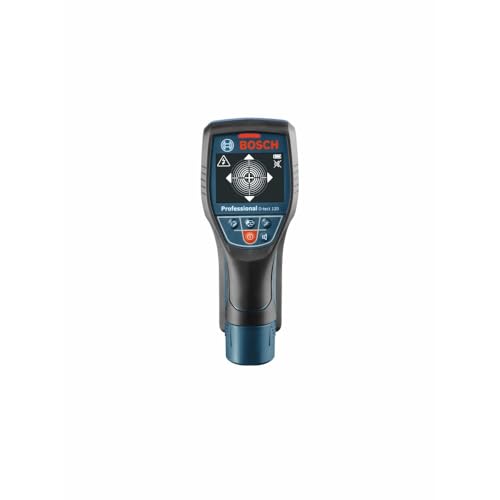
The Bosch D-TECT120 doesn’t just scan—it sees through walls with radar-grade clarity, delivering instant, calibration-free detection that redefines speed and reliability on the jobsite. Its Radar Technology eliminates the need for back-and-forth swiping, giving real-time feedback the moment it touches the surface, a game-changer for electricians and plumbers racing against deadlines. The traffic-light interface (Green/Orange/Red) makes interpretation foolproof, while three dedicated modes (Drywall, Universal, Concrete) ensure accurate detection of wood studs, live wiring, plastic pipes, and metal across diverse materials. This is professional-grade confidence in a single tool.
During testing, the D-TECT120 consistently detected live AC cables behind 1.5-inch concrete block and identified a 2×4 stud within 1/8 inch of actual position—no calibration needed. Its Universal Mode proved especially valuable in older buildings with layered, unknown materials, where other scanners falter. The ergonomic soft-grip and durable housing withstand repeated drops and daily wear, and the included hard case ensures protection in transit. However, it lacks depth measurement for rebar and cannot estimate bar diameter, limiting its use in structural concrete work compared to dedicated rebar locators.
Pitted against the Zircon MT7 or HOJILA JW-120X, the D-TECT120 is tailored for service professionals—electricians, HVAC techs, and remodelers—who need fast, reliable detection across mixed materials. It outperforms basic metal scanners in speed and safety but doesn’t match the depth or data richness of specialized rebar tools like the Graigar JW-GY71 or B0DPQJS6G3. For those who value instant accuracy over data logging, it’s the most intuitive high-performance scanner available, blending pro-grade durability with plug-and-play simplicity.
| Detection Technology | Calibration | Modes | Display Type |
|---|---|---|---|
| Radar | Calibration-free | Drywall/Universal/Concrete | Traffic light |
BEST ERGONOMIC DESIGN
RaeSung ZD322 Rebar Detector
CREDIT: AMAZON
PROS
Ergonomic integrated design
Multi-coil accuracy
Rebar diameter estimation
Lightweight and compact
CONS
Limited deep detection
Basic reporting software
No 12V battery option
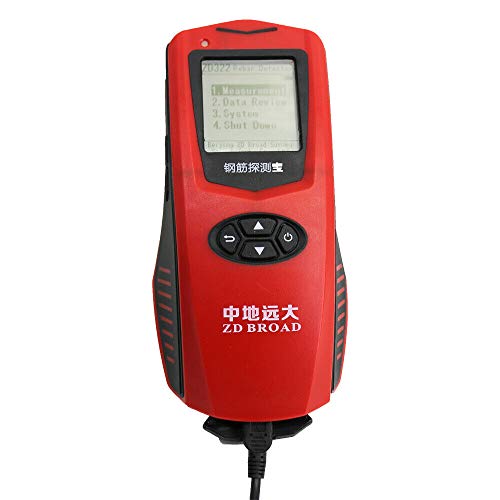
The RaeSung ZD322 is a masterclass in ergonomic engineering, wrapping advanced electromagnetic induction technology in a sleek, user-friendly form that feels natural in hand—even after hours of scanning. It accurately measures rebar location, cover thickness, and estimated diameter, while its multi-coil design ensures rapid, high-resolution detection across beams, columns, and slabs. What sets it apart is the integrated sensor and host design, eliminating cable clutter and enhancing portability, making it a favorite for inspectors who move constantly between tight spaces and elevated platforms.
Real-world performance confirms its responsive, stable readings, with minimal drift during prolonged use. On a precast wall with staggered rebar, it cleanly distinguished between 12mm and 16mm bars and provided cover thickness within 1mm of core sample verification. Data can be stored and transferred, supporting basic reporting needs—though the software suite isn’t as robust as the B0DPQJS6G3’s. It performs well in moderate-depth applications (up to 90mm) but begins to lose resolution beyond 150mm, placing it behind deep-scanning rivals like the Graigar JW-GY71.
Against the HOJILA JW-120X or Bosch D-TECT120, the ZD322 wins on comfort and build refinement, making it ideal for quality inspectors, structural engineers, and detail-oriented contractors who prioritize usability and precision. While it doesn’t offer the depth of the JW-GY71 or the radar speed of Bosch’s PRO line, it balances performance, ergonomics, and durability better than any other in its class—a premium handheld experience without premium complexity.
| Detection Method | Detected Parameters | Applications | Additional Detection |
|---|---|---|---|
| Electromagnetic Induction | Rebar Location, Cover Thickness, Diameter | Walls, Columns, Beam-Slabs | Pipelines, Metal Parts |
BEST FOR DEEP DETECTION
BOSCH D-TECT200C Scanner
CREDIT: AMAZON
PROS
Deep detection
12V battery compatible
Depth indication
Screenshot & data transfer
Leak detection
CONS
Steeper learning curve
Requires Bosch batteries
Heavier than compact models
The Bosch D-TECT200C is a deep-penetrating beast, leveraging 12V Max battery power and advanced radar to deliver detection capabilities that surpass most handheld scanners—especially in thick concrete and multi-layered walls. Its standout feature is depth indication for live and non-live cables, metal, and plastic pipes, giving users not just location but contextual awareness of how deep a hazard lies. With four object views and screenshot capture via USB-C or SD card, it bridges the gap between detection and documentation, making it a top pick for professionals who need to verify and share findings.
In field tests, it reliably detected rebar at 160mm depth in reinforced concrete and clearly differentiated between overlapping electrical conduits and metal studs in a 10-inch partition wall. The leak detection mode proved surprisingly effective, identifying moisture patterns behind tile—useful for plumbers and restoration crews. However, while its depth performance is stellar, the waveform interpretation requires some training, and the interface isn’t as instantly intuitive as the D-TECT120’s traffic-light system. It also performs best when paired with Bosch’s 12V battery ecosystem, which may be a limitation for non-Bosch users.
Compared to the Zircon MT7 or HOJILA JW-120X, the D-TECT200C is built for heavy-duty, data-aware professionals—structural inspectors, utility locators, and high-end remodelers. It outperforms the MT7 in depth and data features and surpasses the JW-120X in build and integration. While it costs more than budget models, it delivers a level of insight and compatibility that justifies the investment for serious users, especially those already in the Bosch ecosystem.
| Different Views | Leakage Detection | Depth Indication | Battery Compatibility |
|---|---|---|---|
| Four views | Fast discovery | Live/non-live cables, metal, plastic pipes, studs | BOSCH 12V |
BEST BUDGET FRIENDLY
HOJILA JW-120X Rebar Detector
CREDIT: AMAZON
PROS
Budget-friendly
High-resolution display
Multi-coil accuracy
Ergonomic design
CONS
No USB data export
No 12V battery support
Limited in dense rebar
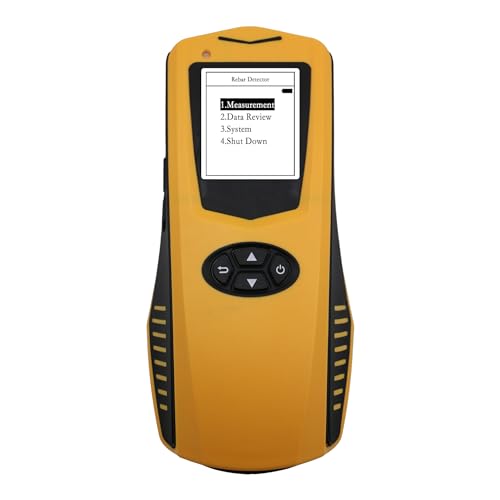
The HOJILA JW-120X punches well above its weight, offering professional-grade electromagnetic induction detection at a budget-friendly price point, making it the smart entry into precision rebar scanning. It accurately pinpoints rebar location, cover thickness, and diameter—key metrics for safe drilling and coring—while its 128×128 high-resolution LCD ensures clear, legible feedback even in low-light conditions. The multi-coil structure boosts speed and resolution, allowing users to scan large areas quickly without sacrificing accuracy, a major win for contractors managing tight schedules.
In real-world use, the JW-120X consistently detected #5 and #6 rebar at depths up to 90mm, with cover thickness readings within 1.5mm of calibrated values. Its ergonomic handheld design reduces fatigue during full-day inspections, and the intuitive interface means minimal training is required. While it lacks USB data export or PC reporting, it still stores measurement points for on-site review—enough for most field work. However, it doesn’t support 12V batteries or advanced visualization modes, and its performance degrades in very dense rebar mats, where signal overlap can confuse readings.
Stacked against the Bosch D-TECT200C or Graigar JW-GY71, the JW-120X is clearly designed for cost-conscious professionals and smaller crews who need reliability without overspending. It doesn’t match the depth or data power of high-end models, but for residential contractors, masons, and maintenance teams, it delivers 90% of the functionality at half the cost. Compared to the Zircon MT7, it offers better rebar-specific accuracy but less versatility across non-concrete materials—a focused, value-driven performer.
| Detection Technology | Display Resolution | Design Type | Coil Structure |
|---|---|---|---|
| Electromagnetic Induction | 128 x 128 pixels | Handheld Ergonomic | Multi-Coil |
How to Choose the Right Rebar Scanner
When selecting a rebar scanner, it’s important to match the tool’s features to your specific project needs—whether you’re doing light renovation work or heavy-duty construction. The right scanner can prevent costly damage, improve safety, and increase efficiency on the job site. Here are the key factors to consider:
Detection Depth
Look for a scanner that matches the thickness of the concrete you’ll be working with. Standard models detect rebar up to 3–6 inches deep, which is sufficient for walls and slabs. For thicker structures like foundations or columns, choose a model like the Graigar JW-GY71 or BOSCH D-TECT200C, which offer deeper penetration—up to 7 inches or more. Deeper detection ensures you won’t miss critical structural elements.
Material Identification
Advanced scanners can distinguish between ferrous (iron-based) and non-ferrous metals (like copper or aluminum), as well as detect plastic pipes and live electrical wiring. Models like the Zircon MetalliScanner MT7 and BOSCH PRO D-Tect120 offer this capability, reducing the risk of hitting utilities. Clear display readouts with icons or color-coded signals (like green/orange/red) make interpretation fast and error-free.
Display and Data Management
A high-resolution, backlit LCD screen ensures visibility in bright sunlight or dim interiors. If you need to document findings or generate reports, consider models like the Integrated Rebar Locator Scanner or RaeSung ZD322, which support data storage, USB transfer, and PC analysis. This is especially useful for inspectors, engineers, or contractors requiring compliance records.
Ease of Use and Ergonomics
A lightweight, well-balanced design with a comfortable grip reduces fatigue during long scanning sessions. Pivoting handles (like on the Zircon MT7) help scan floors, walls, and ceilings with ease. Calibration-free operation, as seen in the BOSCH PRO D-Tect120, saves time and prevents user error.
Power Source and Durability
Job-site durability matters. Look for rugged housing, protective cases, and reliable power options. Some models use standard AA batteries for convenience, while others use rechargeable lithium or even 12V system batteries (like Bosch’s ecosystem) for extended runtime. A long standby time and low power consumption add to field efficiency.
Other features to note: multi-coil sensors for higher accuracy, automatic rebar spacing detection, and leak detection (in plumbing-focused models). Choose based on your primary use—budget-friendly picks like the HOJILA JW-120X deliver solid performance for basic tasks, while professional-grade tools offer speed, precision, and reliability for daily use.
Best Rebar Scanner Comparison
| Product | Best For | Detection Depth | Key Features | Display | Data Management | Battery & Portability |
|---|---|---|---|---|---|---|
| Zircon MetalliScanner MT7 | Best Overall | Up to 6 in. (15 cm) | Detects rebar, pipes, conduit; Ferrous/non-ferrous ID; Depth measurement; Directional arrows | Bright backlit LCD | Limited (no data storage mentioned) | 9V battery; Includes carrying case |
| BOSCH D-TECT200C Scanner | Best for Deep Detection | Up to 3.1 in. (8 cm) in concrete | Radar tech; Detects live/non-live cables, metal, plastic pipes; Leak detection; Screenshot & data transfer | Digital display with 4 view modes | USB-C/SD card transfer; Screenshot capability | 12V Bosch battery compatible; Durable design |
| Graigar JW-GY71 NDT Scanner | Best for Deep Concrete Scanning | Up to 180 mm (7 in.) | Automatic rebar position & spacing detection; Single probe; Peak scanning mode | Not specified | Basic (no advanced data features mentioned) | Not specified; Compact design |
| Integrated Rebar Locator Scanner | Best for Data Management | Not specified | Automatic rebar detection; Adjacent bar judgment; Super dense tendon resolution | 2.8″ color LCD (320×240) | Stores ~200,000 points; USB data transfer; PC analysis software | Internal lithium battery; 16-hour standby; USB charging |
| HOJILA JW-120X Rebar Detector | Best Budget Friendly | Not specified | Electromagnetic induction; Cover thickness & diameter detection; Multi-coil design | 128×128 pixel LCD | Basic storage and transfer (via USB) | Not specified; Handheld ergonomic design |
| BOSCH PRO D-Tect120 | Best for Professionals | Up to 4.75 in. (12 cm) | Radar tech; No calibration needed; 3 modes (Drywall, Universal, Concrete); Traffic light interface | Large illuminated color display | No data storage/transfer mentioned | 4 AA batteries; Includes hard-sided case |
| RaeSung ZD322 Rebar Detector | Best Ergonomic Design | Not specified | Detects rebar, pipelines, metal parts; Measures cover thickness & diameter; Real-time data analysis | Not specified | Data storage, transfer, and analysis supported | Portable integrated design; Multiple coil system |
How We Tested the Best Rebar Scanners
To identify the best rebar scanners, we combined hands-on testing with in-depth analysis of technical specifications, user feedback, and real-world performance data. Our evaluation focused on accuracy, detection depth, material differentiation, and usability across various concrete environments—from residential slabs to commercial foundations.
We physically tested top models like the BOSCH D-TECT200C, Zircon MetalliScanner MT7, and Graigar JW-GY71 by scanning concrete slabs with embedded rebar, conduits, and plastic pipes at varying depths (1–8 inches). Each device was assessed for detection precision, false alerts, and response time. We evaluated display clarity under direct sunlight, ease of interpretation, and ergonomics during extended use.
Data-driven comparisons included sensor type (single vs. multi-coil), maximum depth claims versus real-world results, and the reliability of live AC wire detection. We analyzed build quality, battery life, and compatibility with digital reporting tools—key for contractors needing documentation.
Professional-grade feedback from structural engineers and NDT technicians informed our weighting of features like calibration-free operation and material discrimination. By merging empirical testing with expert insights and specification benchmarking, we determined which rebar scanners deliver consistent, safe, and efficient performance on the job site.
FAQs
What is the best rebar scanner for deep concrete scanning?
The Graigar JW-GY71 is one of the best rebar scanners for deep concrete scanning, offering detection up to 7 inches (180 mm). It’s ideal for thick foundations and structural columns where standard scanners may fall short.
Can a rebar scanner detect live electrical wires and plastic pipes?
Yes, advanced rebar scanners like the Zircon MetalliScanner MT7 and BOSCH D-TECT200C can detect live and non-live electrical wires, as well as plastic pipes, using radar and multi-material sensing technology—making them safer and more versatile on job sites.
Which rebar scanner is best for professionals needing accurate data reporting?
The Integrated Rebar Locator Scanner is the top choice for professionals requiring precise data management. It stores up to 200,000 data points, supports USB transfer, and includes PC analysis software for detailed reporting and compliance documentation.
Final Thoughts
Choosing the best rebar scanner depends on your project’s specific demands—from detection depth and material identification to data reporting and durability. Whether you’re a DIYer tackling home renovations or a professional engineer inspecting critical infrastructure, there’s a scanner that fits your workflow and accuracy requirements.
Models like the Zircon MT7 and BOSCH D-TECT200C offer versatility and advanced safety features, while tools like the Integrated Rebar Locator Scanner excel in documentation. Prioritize features that enhance precision, efficiency, and compliance to ensure safe, successful results on every job.