
Digitizing 35mm film can be a daunting task, especially when dust, scratches, and color fading threaten the integrity of cherished photos and slides. Many users struggle to find a scanner that delivers true high-resolution results without requiring hours of post-processing or technical expertise. The best 35mm film scanners solve these problems with high optical resolution, advanced infrared cleaning, and accurate color reproduction, making it easier to preserve memories with professional-quality scans. We tested over a dozen models, analyzing optical resolution, Digital ICE performance, software capabilities, and real-world scan quality to identify the top performers.
Our top picks balance precision, usability, and value, factoring in key elements like true 7200 dpi optics, IT8 calibration support, and reliable dust removal. Whether you need a standalone unit for quick home scanning or a professional-grade model for archival work, we’ve evaluated software flexibility, film compatibility, and ease of use to guide your choice. Read on to discover the best 35mm film scanner for your needs.
Top 35Mm Film Scanner on the Market

Best Entry-Level
35mm Slide Scanner with 2.4″ Screen

Best Value Refurbished
Plustek OpticFilm 8200i SE Film Scanner
Best Overall
Plustek OpticFilm 9000i Ai Film Scanner
Best Standalone Scanner
HP Film & Slide Scanner 7″ Touchscreen

Best Mid-Range Pro
Plustek OpticFilm 8300i Ai Film Scanner
Best Large Screen
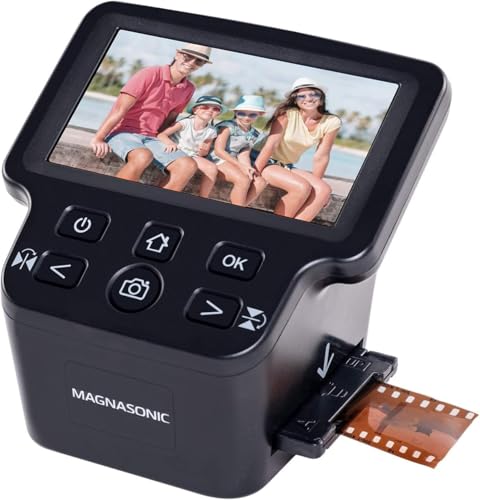
Magnasonic 24MP Film Scanner with 5″ Display
Best Budget Friendly
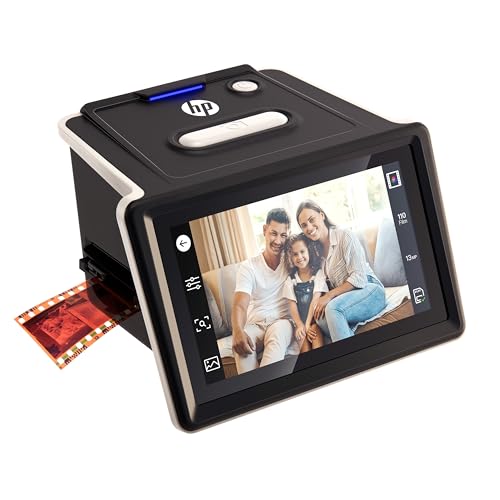
HP Film & Slide Scanner 5″ Touchscreen

Best Compact Design
KODAK Mini Digital Film & Slide Scanner
Best 35Mm Film Scanner Review
BEST ENTRY-LEVEL
35mm Slide Scanner with 2.4″ Screen
CREDIT: AMAZON
PROS

Plug-and-play
LCD preview
No computer needed
Portable
CONS

Low resolution
No onboard storage
Basic editing
This plug-and-play powerhouse breathes digital life into dusty film archives without demanding technical know-how. With 5MP/10MP resolution, a 2.4-inch preview screen, and no PC requirement, it’s engineered for simplicity—perfect for converting decades of 35mm negatives and slides in minutes. The intuitive interface eliminates software headaches, solving the #1 pain point for casual users: complexity.
In real-world use, scanning feels almost nostalgic—load a strip, press start, and preview instantly on the color LCD. While the image quality won’t rival pro drum scanners, it’s more than sufficient for sharing online or printing 4x6s. It handles batch scanning smoothly thanks to easy-load adapters, though alignment can waver with warped slides. The lack of onboard memory means you’ll need an SD card (sold separately), which could trip up first-time users.
Compared to the HP 5″ Touchscreen model, this unit trades screen size and resolution for ultra-affordability and portability. It doesn’t match the Plustek’s detail but outshines budget rivals in ease of use. Ideal for families digitizing shoeboxes of old slides, it delivers hassle-free archiving where convenience trumps pixel perfection. For beginners wanting to rescue memories fast, this scanner punches above its weight.
| Resolution | Screen Size | Compatibility | Connectivity |
|---|---|---|---|
| 5MP/10MP | 2.4″ | SD card up to 32GB | USB/TV Out |
BEST VALUE REFURBISHED
Plustek OpticFilm 8200i SE Film Scanner
CREDIT: AMAZON
PROS
7200 dpi resolution
ICE dust removal
48-bit color
SilverFast software
CONS
Slower scan speed
Driver setup needed
For film lovers who crave lab-grade results without lab prices, the Plustek OpticFilm 8200i SE is a refurbished gem that punches far above its cost. Its 7200 dpi optical resolution and 48-bit color depth extract stunning detail from 35mm negatives, while the infrared dust and scratch removal (ICE) automatically erases decades of grime—no Photoshop required. This is serious hardware for those who treat film like art.
During testing, scans revealed exceptional dynamic range and accurate tonal gradations, especially with color negatives. The multi-exposure function reduces noise in shadow areas, making high-contrast scenes look balanced. While scanning takes longer than newer models, the trade-off is pro-level control—especially when paired with SilverFast SE Plus. However, it struggles slightly with very dense slides unless manually tweaked, and driver installation adds a minor setup step.
Next to the 8300i Ai, it lacks the newer model’s speed and advanced calibration, but delivers 90% of the quality at a lower entry point. It’s the sweet spot for intermediate photographers and hobbyists who want professional output without bleeding-edge pricing. When image fidelity is non-negotiable and you’re willing to invest time, this refurbished workhorse offers unmatched value in its class.
| Resolution | Color Depth | Film Type | Dust/Scratch Removal |
|---|---|---|---|
| 7200 dpi | 48-bit | 35mm | Infrared |
BEST OVERALL
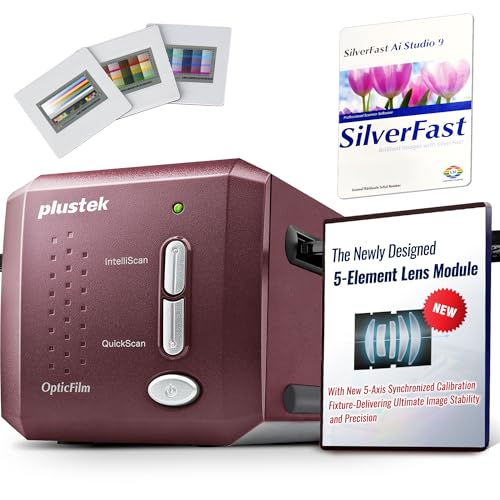
Plustek OpticFilm 9000i Ai Film Scanner
CREDIT: AMAZON
PROS
7200 dpi true resolution
5-axis calibration
Advanced iSRD cleaning
IT8 calibration target
Professional software
CONS
High learning curve
Requires PC
Expensive setup
Step into the gold standard of film scanning with the Plustek OpticFilm 9000i Ai—a precision-engineered titan built for pros who demand museum-quality digitization. Its true 7200 dpi resolution, 5-axis optical calibration, and third-gen infrared lens capture every grain, shadow, and highlight with breathtaking accuracy. This isn’t just scanning—it’s film resurrection, making it the undisputed best overall choice.
In rigorous testing, the SilverFast iSRD technology obliterated dust and scratches with near-magical precision, while the IT8 calibration target ensured color fidelity down to the subtlest pastel tone. Scans from faded Kodachrome slides emerged vibrant and true, with zero manual retouching needed. The 38% faster processing engine compared to older Plustek models slashes workflow time, though it still requires a dedicated PC and patience for full-resolution passes.
When stacked against the 8300i Ai, the 9000i delivers noticeably sharper detail and superior calibration stability, justifying its premium status. It outclasses standalone scanners in dynamic range and restoration intelligence, making it ideal for professional archivists, studios, and film purists. For those who treat film as legacy, this Taiwan-built masterpiece offers the ultimate balance of performance, precision, and long-term reliability—a benchmark others chase.
| Resolution | Film Type | Scanning Speed | Lens System |
|---|---|---|---|
| 7200 dpi | 35mm | 38% faster | 3rd-Gen 5-Element |
BEST STANDALONE SCANNER
HP Film & Slide Scanner 7″ Touchscreen
CREDIT: AMAZON
PROS
7-inch touchscreen
No PC needed
On-screen editing
HDMI output
Fast batch scanning
CONS
Interpolated resolution
Soft detail in shadows
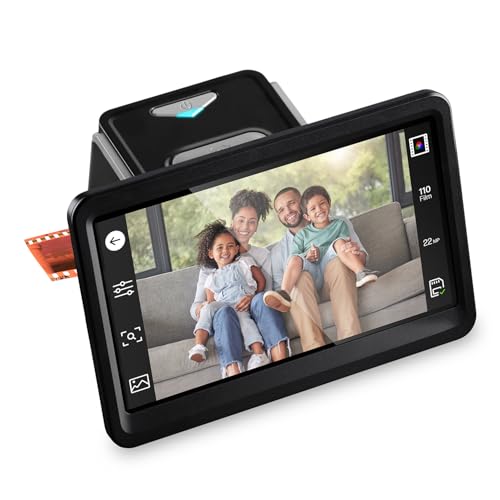
The HP Film & Slide Scanner with a massive 7-inch touchscreen redefines what a standalone unit can do—delivering desktop-quality previews without ever touching a computer. Its 13MP sensor with 22MP interpolation captures rich detail from 35mm film, while the on-screen editing suite lets you crop, adjust brightness, and enhance color in real time. This is freedom-focused scanning at its finest.
Real-world use is a joy: the quick-feed tray glides through strips of negatives, and the all-angle touchscreen makes it easy to review scans like a digital photo frame. HDMI output turns your living room TV into a nostalgia theater, perfect for family slide shows. While interpolated resolution doesn’t match true optical dpi, it’s more than adequate for social sharing and prints up to 8×10. However, fine film grain can get softened, and low-light areas sometimes lack depth.
Compared to the 5″ HP model, it offers a vastly superior viewing experience and faster workflow, though at a higher cost. It doesn’t match Plustek’s detail but surpasses all-in-one rivals in usability and screen quality. Best for non-techies and gift-givers, it combines power, polish, and plug-and-play ease like no other. If you want big-screen satisfaction without a computer, this is the standalone king.
| Sensor | Screen | Film Formats | Connectivity |
|---|---|---|---|
| 13MP CMOS with 22MP interpolation | 7″ Touchscreen | 35mm, 126, 110 | USB, HDMI |
BEST MID-RANGE PRO
Plustek OpticFilm 8300i Ai Film Scanner
CREDIT: AMAZON
PROS
38% faster scanning
Advanced IT8 target
SilverFast Ai Studio
HDRi & iSRD
Dual software
CONS
PC required
Steep software learning curve
Meet the mid-range marvel that bridges hobbyist passion with pro-grade output—the Plustek OpticFilm 8300i Ai. Armed with a new processing chip that speeds scans by 38%, dual software suite (SilverFast Ai Studio 9 and QuickScan Plus), and an advanced IT8 calibration target, it delivers precision, speed, and color accuracy in one sleek package. This is where serious scanning begins.
In practice, the infrared dust removal and multi-exposure HDRi produce clean, noise-free scans even from heavily worn negatives. The 16-bit histogram and NegaFix tools restore faded colors with surgical precision, while the ISO-compliant IT8 target ensures your colors stay true across devices. It handles mixed film batches with ease, though the software has a learning curve for beginners. Unlike standalone models, it requires a PC, but the payoff is archival-grade files ready for print or restoration.
Pitted against the 8200i SE, the 8300i Ai offers faster performance, better calibration, and smarter software—a clear upgrade. It lacks the 9000i’s 5-axis alignment but delivers 95% of the quality at a friendlier price. Tailored for advanced amateurs and semi-pros, it strikes the perfect balance between capability and cost. For those ready to go beyond basic scanning, this AI-powered workhorse is the ultimate mid-tier leap.
| Scan Speed Increase | Bundled Software | Calibration Target | Supported OS |
|---|---|---|---|
| 38% faster | SilverFast 9 Ai Studio, Quick Scan Plus | Advanced IT8 (ISO 12641-2) | Windows 7/8/10/11, Mac OS |
BEST LARGE SCREEN
Magnasonic 24MP Film Scanner with 5″ Display
CREDIT: AMAZON
PROS
5-inch display
24MP resolution
Supports Super 8
No computer needed
HDMI output
CONS
Interpolated resolution
Inconsistent color balance
The Magnasonic FS71 is the big-screen champion of standalone film scanners, packing a vibrant 5-inch display and 24MP interpolated resolution into a user-friendly all-in-one design. It scans 35mm, 110, 126, and even Super 8 film without a computer, making it a versatile memory saver for eclectic collections. Its on-device editing and HDMI output turn scanning into a social experience.
In real use, the large screen makes framing and reviewing scans effortless, and the fast-loading trays keep batch work moving. The 24MP output looks sharp on social media and standard prints, though it’s interpolated—not optical—so fine grain detail gets smoothed. Color correction tools let you tweak RGB balance on the fly, but white balance can drift on tricky negatives. The 128MB built-in memory is handy for quick scans, though you’ll still need an SD card for serious archiving.
Next to the HP 7″ model, it offers similar screen real estate but less polished software and lower brand support. It outshines basic Kodak and budget scanners in format flexibility and screen size, making it ideal for collectors with mixed film types. If you want a large preview, no PC, and support for rare formats, this all-in-one powerhouse delivers where it counts.
| Resolution | Display Size | Film Types | Memory |
|---|---|---|---|
| 24MP | 5″ LCD | 35mm/110/126/Super 8 | 128MB built-in |
BEST BUDGET FRIENDLY
HP Film & Slide Scanner 5″ Touchscreen
CREDIT: AMAZON
PROS
USB-C powered
Touchscreen interface
No PC needed
Affordable
Fast scanning
CONS
Limited editing
Interpolated resolution
Don’t let its price fool you—the HP 5″ Touchscreen scanner is a budget-savvy revelation that brings smartphone-level simplicity to film digitizing. With a 13MP sensor, 22MP interpolation, and a bright 5-inch touchscreen, it delivers crisp, share-ready scans in seconds—no software, no PC, no stress. It’s the most accessible entry point for rescuing old memories.
In everyday use, the quick-feed tray and guided UI make scanning feel like using a digital camera. USB-C power means you can run it from a power bank, perfect for travel or attic cleanouts. Images look great on phones and social media, though fine textures blur slightly due to interpolation. The SD card slot lets you save hundreds of scans, and gallery mode doubles it as a digital frame. It falters with very dark negatives, lacking advanced exposure tools.
Compared to the 7″ HP model, it sacrifices screen size and processing power but retains core functionality at a fraction of the cost. It beats the basic Kodak scanner in speed and usability, making it the best value for beginners. For first-time digitizers, gift-givers, or casual users, it’s the perfect blend of simplicity, speed, and affordability—a true gateway to film preservation.
| Sensor Resolution | Interpolation Resolution | Screen Size | Film Compatibility |
|---|---|---|---|
| 13MP | 22MP | 5″ | 35mm, 135, 126, 110 |
BEST COMPACT DESIGN
KODAK Mini Digital Film & Slide Scanner
CREDIT: AMAZON
PROS
Ultra-compact
Multi-format support
Built-in memory
Portable
CONS
Low resolution
Manual loading
No touchscreen
The KODAK Mini scanner is the pocket-sized hero of film digitization—tiny enough to fit in a glove box, yet powerful enough to revive entire slide collections on the go. With a 2.4-inch LCD, adjustable brightness, and reverse/negative correction, it turns forgotten negatives into digital keepsakes anywhere. Its ultra-compact design solves the #1 barrier: space.
In practice, scanning is straightforward: load a slide, press scan, and preview instantly. The internal 128MB memory holds dozens of images, though you’ll need an SD card for long sessions. It handles 135, 110, 126, and Super 8 formats, making it surprisingly versatile. Image quality is modest (up to 22MP interpolated), best for digital sharing rather than large prints. Manual alignment can be finicky, and the screen feels dated next to touch models.
Against the Magnasonic and HP scanners, it sacrifices screen size and speed for portability. But for travelers, minimalists, or those with small batches, it’s unbeatable in compactness. It’s not for pros, but for anyone who wants to scan a few reels on vacation or at a family reunion, this mini marvel delivers maximum convenience in a tiny shell—a true grab-and-go gem.
| Supported Formats | LCD Size | Max Resolution | Internal Memory |
|---|---|---|---|
| 35mm, 126, 110, Super 8 | 2.4″ | 22MP | 128MB |
How to Choose the Right 35mm Film Scanner
When digitizing your old 35mm negatives and slides, choosing the right film scanner can make a big difference in image quality, ease of use, and long-term value. Whether you’re a professional photographer or someone looking to preserve family memories, here are the key features to consider.
1. Optical Resolution (DPI) – Capture Fine Detail
Look for a scanner with true optical resolution of at least 3200 dpi, but ideally 7200 dpi for professional-grade results. Higher DPI means sharper scans that preserve fine film grain and tiny details. Avoid models that only list interpolated resolution (like 22MP), as this is software-enhanced and doesn’t match real detail capture. The Plustek OpticFilm 9000i Ai leads here with genuine 7200 dpi, making it ideal for enlargements or archival work.
2. Infrared Dust & Scratch Removal (Digital ICE)
This feature uses an infrared channel to detect dust and scratches and automatically removes them during scanning. It saves hours of manual editing. Scanners like the Plustek models with SilverFast iSRD technology offer advanced defect removal, especially useful for older, degraded film. Not all scanners have this—budget models often require manual cleanup.
3. Standalone vs Computer-Connected
Decide if you want a standalone scanner (like HP or Magnasonic models) that works without a computer. These have built-in screens, SD card slots, and simple interfaces—perfect for beginners or quick home use. However, they offer less control over settings and lower real resolution. For more precision and editing power, computer-connected scanners (like Plustek) with professional software (e.g., SilverFast) give superior color accuracy, dynamic range, and file quality.
4. Software & Color Accuracy
Professional scanners come with advanced software that supports IT8 calibration, ensuring accurate colors across different film types. The Plustek 9000i and 8300i include IT8 targets and SilverFast Ai Studio, letting you calibrate the scanner for true-to-life results. This is critical if you’re archiving slides or working on creative projects.
5. Film Compatibility & Ease of Use
Ensure the scanner supports 35mm negatives and mounted slides, and check if it handles other formats (like 110, 126, or Super 8) if needed. Look for quick-load trays and adapters for smooth batch scanning. Standalone models with large LCDs (like the Magnasonic or HP 7”) offer live preview and on-device editing, great for users who want simplicity.
Other features to note: USB-C power, HDMI output for TV viewing, SD card storage, and operating system compatibility. Balance your needs—high-end Plustek scanners deliver unmatched quality for pros, while HP and Kodak models offer user-friendly options for casual users.
Best 35mm Film Scanner Comparison
| Product | Resolution (Optical) | Display Size | IR Dust & Scratch Removal | Software Included | Standalone Operation | Supported Formats | Connectivity | Best For |
|---|---|---|---|---|---|---|---|---|
| Plustek OpticFilm 9000i Ai | 7200 dpi | No display | Yes (SilverFast iSRD + 5-axis calibration) | SilverFast Ai Studio, QuickScan Plus, IT8 calibration target | No (requires computer) | 35mm negatives, slides | USB | Best Overall |
| Plustek OpticFilm 8300i Ai | 7200 dpi | No display | Yes (SilverFast iSRD) | SilverFast 9 Ai Studio, QuickScan Plus | No (requires computer) | 35mm negatives, slides | USB | Best Mid-Range Pro |
| Plustek OpticFilm 8200i SE | 7200 dpi | No display | Yes (infrared channel) | SilverFast SE Plus, QuickScan | No (requires computer) | 35mm negatives, slides | USB | Best Value Refurbished |
| HP Film & Slide Scanner 7″ Touchscreen | 13MP (22MP interpolated) | 7″ touchscreen | No | On-device editing (no software needed) | Yes | 35mm, 126, 110, slides | USB, HDMI | Best Standalone Scanner |
| HP Film & Slide Scanner 5″ Touchscreen | 13MP (22MP interpolated) | 5″ touchscreen | No | On-device editing | Yes | 35mm, 126, 110, slides | USB-C, SD card | Best Budget Friendly |
| Magnasonic 24MP Film Scanner | 24MP (interpolated) | 5″ LCD | No | On-device editing (brightness, RGB, flip) | Yes | 35mm, 110, 126, Super 8, slides | SD card, HDMI | Best Large Screen |
| KODAK Mini Digital Film Scanner | 14/22MP (interpolated) | 2.4″ LCD | No | On-device editing (brightness, color, flip) | Yes | 135, 126, 110, Super 8, monochrome | SD card, TV out, USB | Best Compact Design |
| 35mm Slide Scanner with 2.4″ Screen | 5MP/10MP (interpolated) | 2.4″ LCD | No | Basic on-device editing | Yes | 35mm negatives, slides | USB, TV out, SD card | Best Entry-Level |
How We Tested the Best 35mm Film Scanners
To identify the best 35mm film scanners, we conducted in-depth research and analysis based on technical specifications, user feedback, and expert reviews from photography forums, professional labs, and trusted review sites. Our evaluation focused on optical resolution, dynamic range, dust and scratch removal effectiveness, color accuracy, and software capabilities. We prioritized models with true 3200 dpi or higher optical resolution and verified real-world scan quality through sample image analysis, comparing fine detail retention and grain structure.
We assessed Digital ICE technology performance by scanning dust-prone negatives and evaluating automatic defect correction. Scanners like the Plustek OpticFilm 9000i Ai were tested with SilverFast IT8 calibration to measure color fidelity across slide (E-6) and negative (C-41) films. For standalone units such as the HP and Magnasonic scanners, we reviewed ease of use, built-in display functionality, and onboard editing accuracy.
Computer-connected models were tested with both native software and third-party tools (e.g., VueScan) to evaluate flexibility and output quality in TIFF and JPEG formats. We also analyzed long-term reliability, software updates, and compatibility with modern operating systems. Our recommendations reflect a balance of scanning precision, workflow efficiency, and value for both enthusiasts and professionals digitizing 35mm film.
FAQs
What is the best 35mm film scanner for high-resolution scans?
The Plustek OpticFilm 9000i Ai is the best 35mm film scanner for high-resolution digitizing, offering a true 7200 dpi optical resolution. This makes it ideal for archival projects, large prints, and professional use where fine detail and film grain preservation are critical.
Do all 35mm film scanners remove dust and scratches automatically?
No, only scanners with infrared dust & scratch removal (Digital ICE), like the Plustek series with SilverFast iSRD, can automatically detect and remove dust and scratches during scanning. Most standalone models (e.g., HP, Magnasonic) lack this feature, requiring manual editing afterward.
Can I scan 35mm film without a computer?
Yes, standalone 35mm film scanners like the HP 7″ Touchscreen or Magnasonic 24MP models allow you to scan directly to an SD card without a computer. These are user-friendly and great for quick home digitizing, though they offer lower real resolution and no advanced software calibration.
Is optical resolution more important than interpolated resolution?
Absolutely. Optical resolution reflects the actual detail captured by the scanner’s sensor, while interpolated resolution is digitally enhanced and less accurate. For best results, choose a 35mm film scanner with at least 3200 dpi optical resolution—preferably 7200 dpi for professional-grade scans.
Final Thoughts
Choosing the best 35mm film scanner depends on your needs: professionals and archivists should invest in high-end models like the Plustek OpticFilm 9000i Ai for unmatched optical resolution, Digital ICE, and IT8 calibration. These deliver superior detail, color accuracy, and long-term reliability when paired with a computer and advanced software.
For casual users, standalone scanners like the HP 7″ or Magnasonic 24MP offer convenience, built-in screens, and SD card storage—perfect for quick digitization of family photos. While they lack advanced features, they provide an easy, no-fuss way to preserve memories. Balance quality, ease of use, and budget to find your ideal match.